
The name “ita bag” comes from two words: the Japanese 痛い (itai, meaning painful or ouch) and the English word bag. The hybrid term itabag (痛バッグ) first appeared in Japanese otaku fandom communities in the mid-to-late 2000s, borrowed directly from the “itasha” car culture that had been building in Akihabara and at Comiket for the same years. Understanding why the word “painful” ended up attached to a bag requires knowing where the word came from first. If you want the full context behind the bag format itself, start with What Is An Ita Bag.
The word ‘ita’ comes from the Japanese 痛い (itai)
痛い (itai) is a common Japanese word for pain — the kind you say when you stub your toe or get a paper cut. In everyday use it’s straightforward: something hurts, something is painful. But in Japanese internet and fandom communities, the word picked up a secondary meaning: something so excessive, so embarrassingly enthusiastic, that it crossed a line into social cringe. “That’s itai” meant “that’s so much it’s uncomfortable to look at.”
The fandom use of 痛い follows a pattern that shows up in many languages: taking a negative word and using it to describe something that’s deliberately, proudly excessive. The thing isn’t bad — it’s almost too good, too committed, too much on display. Japanese online culture refined this usage through the 2000s, especially in communities built around manga, anime, and character goods.
The leap from “painful” to “a word you’d use for your own bag” happened because fans adopted it as self-aware humor. Covering a bag in character merch until it barely resembled a bag was objectively too much — fans knew it, acknowledged it by using the word, and did it anyway. The self-deprecation and the commitment to the bit coexisted.
The ita in itabag is also shortened in practice to 痛バ (ita-ba) in Japanese internet shorthand — cutting the full バッグ (baggu, bag) down to just バ (ba). This shortening is typical of how Japanese fandom communities compress compound words into faster handles for repeated use.
How ‘painful’ became a fandom compliment
The shift from insult to identity marker is not unique to ita bag culture — similar shifts happen whenever a subculture adopts a term from outsiders and reuses it with pride. The key is that the word was never being used by critics first. It was used by participants, about themselves, with full awareness of the irony.
When someone calls their own bag ita, they’re not apologizing. They’re acknowledging that the level of merch commitment is beyond what a casual observer would consider normal — and they’re signaling that they don’t care. The word frames the intensity as a feature. “Yes, this is a lot. That’s the point.” This kind of self-aware excess is a specific fandom posture: it signals that the person is deep enough in the culture to know the vocabulary and confident enough in their taste to use it about themselves.
Over time, as the format became established, the ironic distance collapsed entirely. By the time ita bags spread to Western communities, the word was being used purely as a descriptor — not self-deprecating, not ironic, just the name of the bag type. English-speaking fans picked up the term as a neutral category label and largely don’t use it with the original self-mocking register.
| Term | Kanji | Literal meaning | Fandom meaning |
|---|---|---|---|
| Itai | 痛い | Painful / ouch | Embarrassingly excessive; cringe-worthy but self-aware |
| Itasha | 痛車 | Painful car | Car covered in anime character vinyl art |
| Itabag | 痛バッグ / 痛バ | Painful bag | Bag with transparent display window for fandom merch |
| Ita-ba | 痛バ | Painful bag (short form) | Japanese internet shorthand for itabag |
The original itasha: the car culture that inspired the bags
Itasha (痛車) predates itabags by several years. The word combines 痛 (ita, painful) with 車 (sha, vehicle/car). An itasha is a car whose exterior has been covered — fully or partially — in vinyl wraps, paint, or decals depicting anime, manga, or game characters. The aesthetic is unmistakable: an otherwise ordinary sedan or sports car with enormous character artwork covering the doors, hood, and rear panels.
Itasha culture grew in Japan during the early-to-mid 2000s alongside growing fandom around visual novels, anime adaptations, and the character goods market. Comiket and similar events became spots where itasha owners would gather and display their cars, turning vehicle customization into a form of fandom expression. The cars were deliberately public and impossible to ignore — which was the entire point. The more the display covered, the more committed the owner appeared.
The naming logic is exact: calling a car “painful” because it’s so covered in fandom artwork that it hurts (or at least makes you do a double take) was the same register as everything else in the itai vocabulary. The car is not bad. It’s excessive in a way that commands attention, and the owner knows it.
When fans began transferring the same display logic to bags — covering them in pins, badges, and character artwork — the naming pattern was already established. A bag that does what an itasha car does, but worn instead of driven, naturally picked up the same “ita” prefix. The bag format borrowed the aesthetic philosophy and the name simultaneously.
Itasha culture is still active in Japan. Car shows, Comiket parking areas, and dedicated itasha events run alongside the broader ita bag community. The two subcultures share the same etymology, the same origin communities, and the same drive toward maximum visible fandom expression.
How the term spread outside Japan
Japanese fandom vocabulary has been seeping into Western fan communities through fansubbing, scanlation, and then direct internet exposure since the early 2000s. Itabag was slower to cross over than some terms because it required physical merch — you couldn’t just adopt the concept without having pins and character goods to put in a bag.
The term and the format became visible in Western communities primarily through Tumblr, starting around 2013–2015. Fans who had bought merchandise at conventions, through import shops, or from Japanese online retailers began photographing their displays and tagging them with #itabag. The hashtag created a visible community around the format before most participants had any clear understanding of the etymology.
Instagram carried the format further. The visual nature of the platform made bag display posts highly shareable, and accounts dedicated to ita bag collections, tutorials, and event photography grew steadily from 2016 onward. YouTube tutorials on how to set up an ita bag, which insert to buy, and how to arrange merch brought the practical side to a wider audience who might not have engaged with fandom hashtags.
K-pop communities accelerated adoption significantly after around 2017–2018. BTS’s global popularity in particular brought enormous numbers of new fans into contact with physical merch culture — photocards, photo books, lightsticks — and the ita bag format gave them a way to carry and display that merch. K-pop fans adopted the bag format and the name without most of the Japanese cultural context, which is why the word now circulates in Western fandoms as a straightforward product category name rather than a piece of fandom slang.
What ‘ita’ means in practice today
In current use, “ita bag” functions primarily as a product category descriptor. It means: a bag with a transparent display panel designed to show off fandom merch. The word’s etymology — painful, cringe-worthy, embarrassingly excessive — is still known within fandom communities but doesn’t carry the original ironic weight for most buyers.
Among longtime fandom participants, especially those with connections to Japanese fan culture, the original meaning still lands as a kind of in-joke or cultural marker. Using the word correctly — knowing why it’s “painful,” understanding the itasha connection — signals familiarity with the deeper culture. For most buyers, it’s just the name of the bag type.
Both uses are fine. The word has done what good fandom slang often does: it traveled, adapted, lost some of its original edge, and became the standard label for a real category of things. The bags themselves — transparent windows, insert panels, fandom merch on display — haven’t changed in concept since the first itabag appeared at Comiket. Only the communities and the fandoms filling the windows have expanded.
If you want to understand the full arc from early itasha culture through to the global ita bag market today, the History of Ita Bag Culture post covers that in detail. To find a bag, the ita bag shop has the current range.
Shop Popular Ita Bags
Clear window styles, mini crossbodies, convention backpacks, and starter kits — the most popular picks from YourItBag.
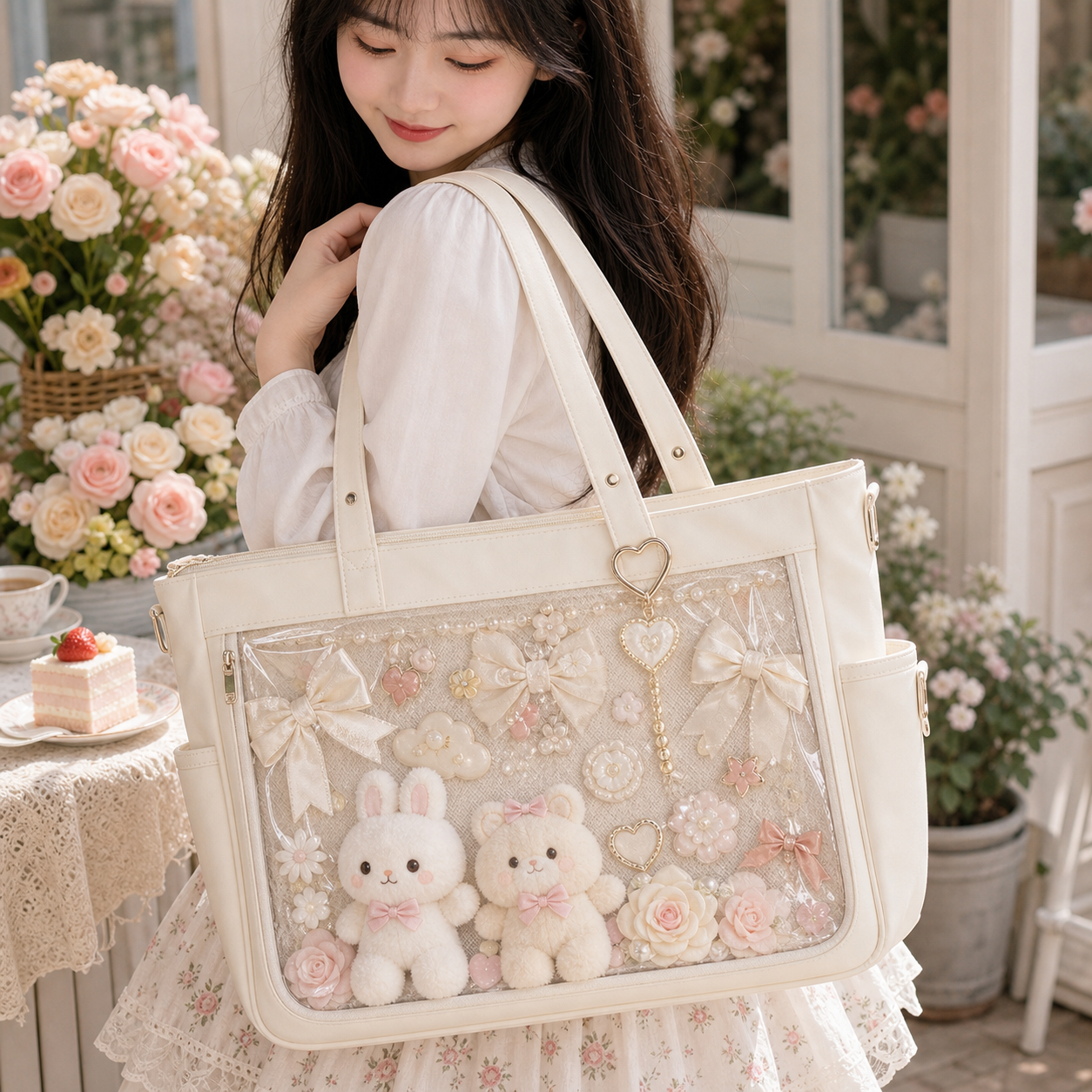
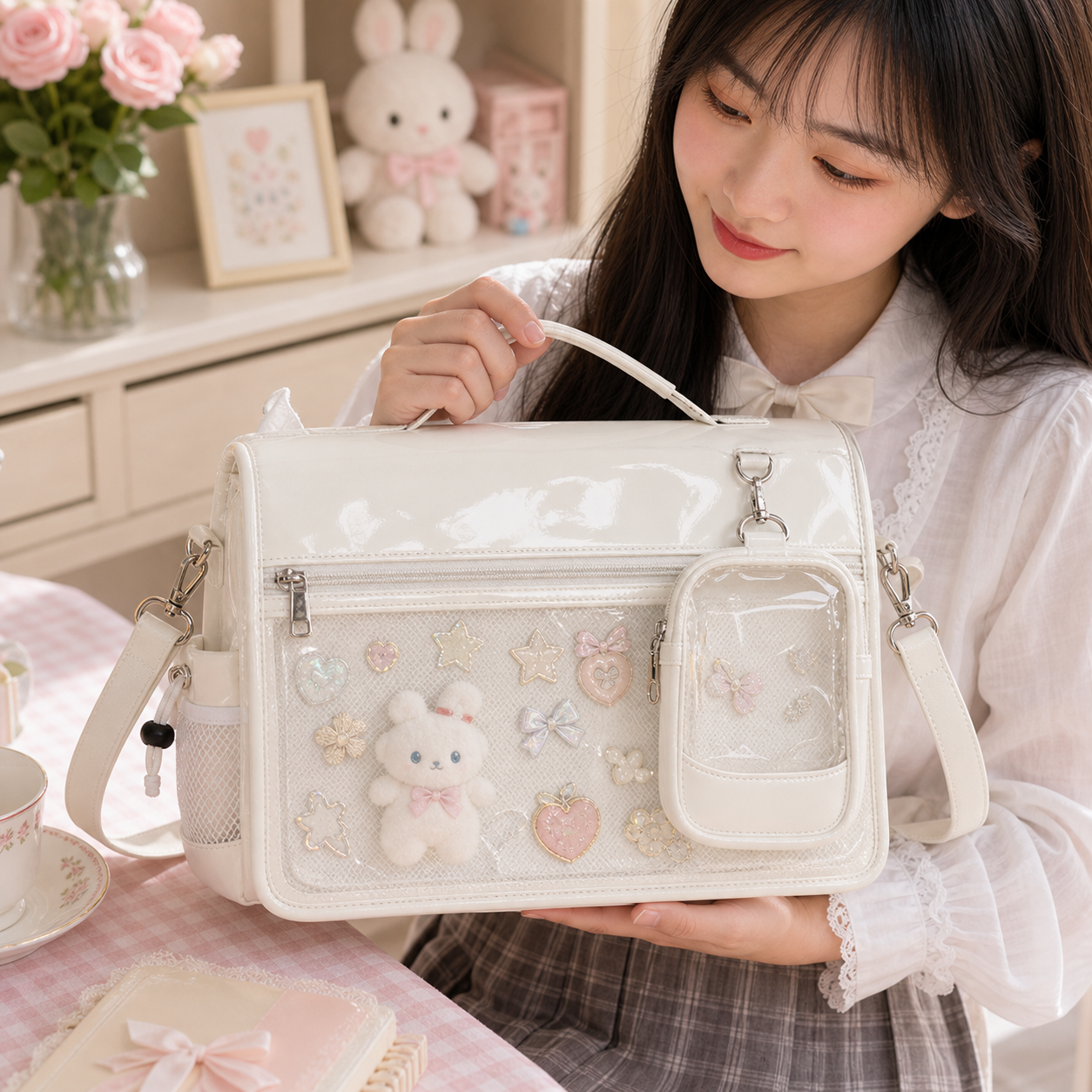
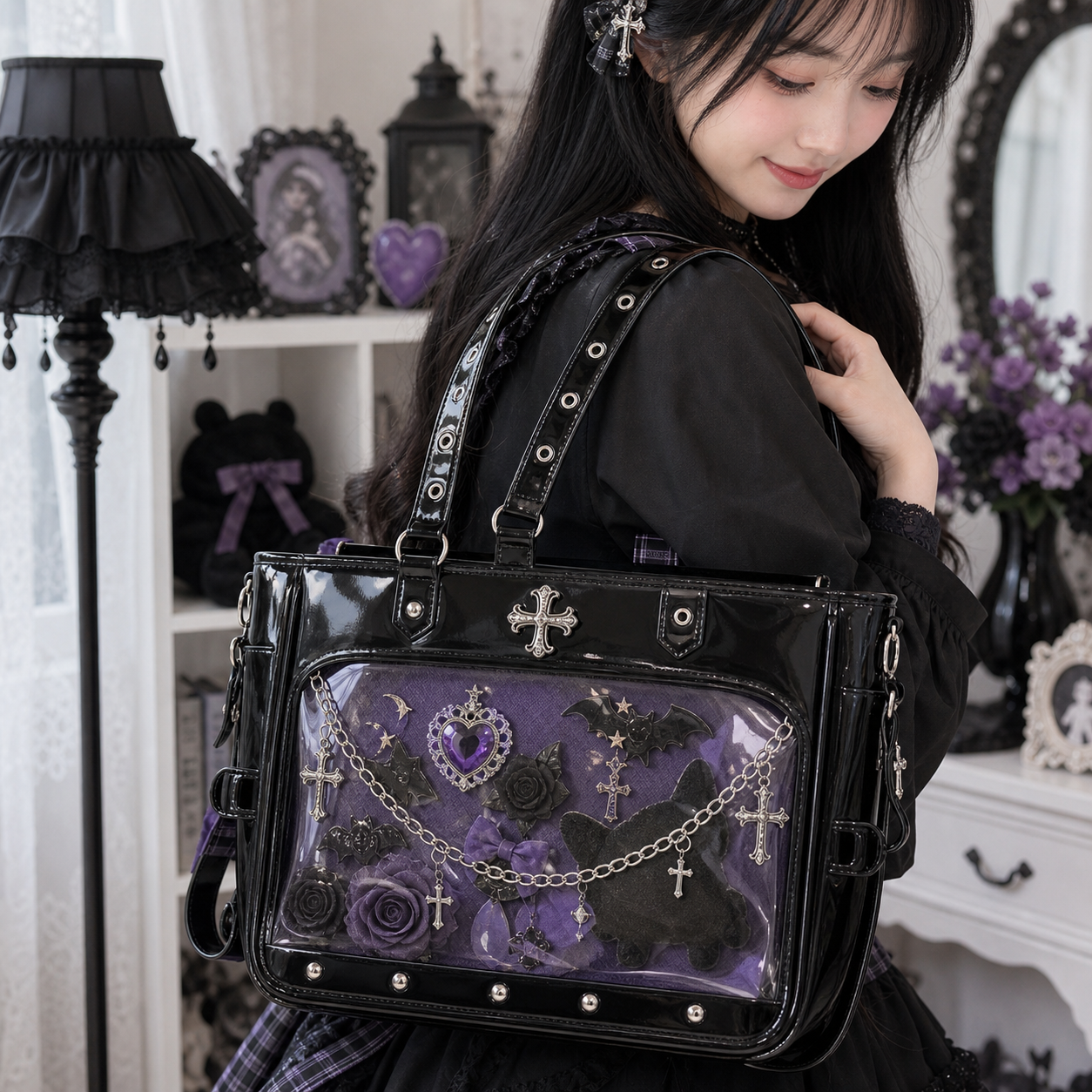
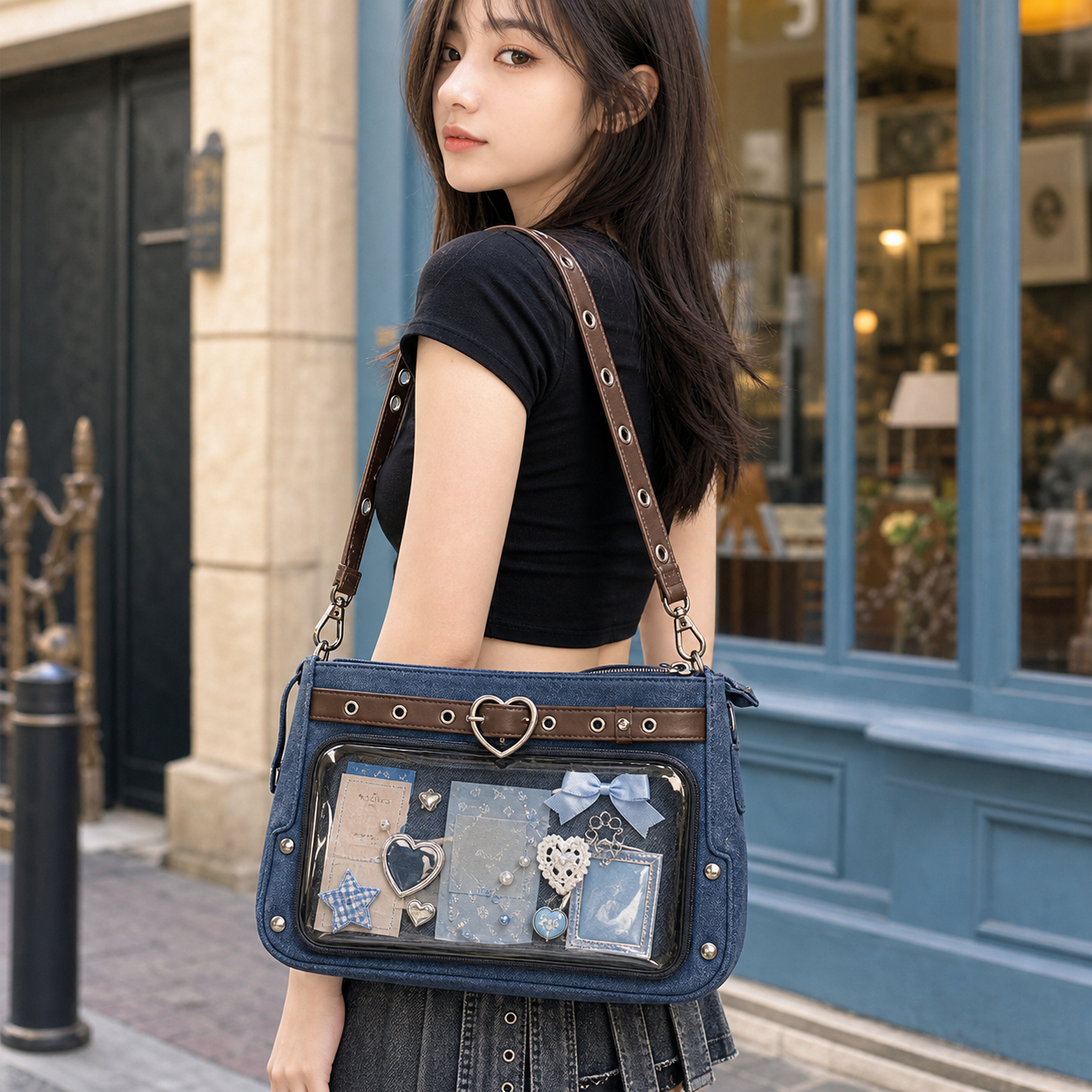
FAQ
Is ‘ita’ a negative word?
Originally it was self-deprecating — Japanese fandom communities used 痛い (itai / painful) to describe merch displays so extreme they were embarrassing. But the word became a term of pride. Saying your bag is ita is now a compliment, not a criticism. The self-deprecating humor acknowledged the excess while celebrating the commitment, and over time the irony dropped away to leave just the pride.
What does ‘itasha’ mean and how is it related?
Itasha (痛車) means “painful car” — a car covered in anime or game character art. Ita bags borrowed the same naming logic. The 車 (sha) means vehicle, and 痛 (ita) comes from the same painful/cringe root. Fans who were wrapping cars in character art began applying the same display philosophy to bags, and the name followed the concept. Ita bags are sometimes described as the wearable, portable version of itasha culture.
Does ‘bag’ in ‘ita bag’ come from Japanese or English?
The ‘bag’ is the English word, absorbed into Japanese as バッグ (baggu). The full term itabag (痛バッグ) blends the Japanese 痛 with the English loan word. This kind of language mixing — using an English word with Japanese phonetics inside a Japanese compound — is common in Japanese fandom and consumer product vocabulary. The shortened form 痛バ (ita-ba) cuts the English root even further into a single Japanese character sound.
When was the term ‘ita bag’ first used?
The term emerged in Japan in the mid-to-late 2000s, roughly around the same time itasha car culture peaked. Comiket and Akihabara were the primary origin contexts. It spread to Western fandom communities through social media — primarily Tumblr — during 2013–2016, and became a mainstream fandom term globally through Instagram, YouTube, and K-pop community adoption through 2018–2020.
Ita Bag in Japanese, Wego, and the Japan Connection
The phrase ita bag in Japanese is 痛イタバッグ (itabaggu) — combining the kanji for painful (痛, ita) with the katakana for “bag” (バッグ, baggu). In Japan, the trend is written and searched both in kanji-katakana mix and in pure katakana: イタバッグ.
The shorter form ita bag japanese (without “in”) is also commonly searched and refers to the same concept — the Japanese word itabaggu or the product’s Japanese origin. Ita bag in Chinese is written 痛包 (tòng bāo) using the same logic — the character 痛 (painful) + 包 (bag).
The ita bag Japan origin story is tied closely to Akihabara’s otaku culture in the late 2000s. Early adopters modified existing bags — usually messenger bags or totes — with hand-sewn clear pockets. The practice spread through Comiket and fan communities before commercial versions became widely available.
One of the earliest and most influential brands in the space was Wego, a Japanese street fashion retailer. The Wego ita bag became a defining product in the early commercial ita bag market — Wego’s designs established many of the standard formats still used today: the heart-shaped window, the crossbody silhouette, and the pastel colorways. When collectors search for ita bag Wego, they are often looking for that original Japanese retail quality or the specific Wego design language.
Today, Wego ita bags and their successors are available internationally through proxy shopping services and online retailers. The Wego-influenced designs remain popular as a reference point for what a “classic” ita bag looks like.
Start your own ita bag collection
Now that you know where the name comes from and what it means, the next step is finding the right bag for your merch. Browse the full range of ita bag styles, from totes and backpacks to crossbody bags and mini formats.
How the Term Changes Across Languages
Ita bag in chinese belongs on this main guide because buyers need the same core checks: usable window size, insert access, carry comfort, closure, and material quality.
Readers also search for ita bag in chinese, chinese ita bag, ita bag chinese, chinese ita bags. These are best treated as variations of the main topic rather than separate products or separate guides. Compare the visible window, insert access, strap comfort, closure, and return policy before choosing a bag.
For color and shape variations, the most useful question is not whether the listing uses the exact same name. Check whether the bag supports the collection: flat space for pins and cards, enough depth for plushies, and a base color that lets the merchandise remain readable.
Use the size guide to confirm capacity, browse all ita bags for current options, and check accessories when the bag needs an insert or safer pin backs.
Questions Buyers Ask
What should I check before ordering?
Confirm the visible window size, insert access, strap length, closure, material, and return policy. Product photos alone rarely show whether a bag will fit a specific collection.
How do I choose between two similar bags?
Choose the one that fits the merchandise and carry use. Window depth matters for plushies, flat area matters for pins and cards, and strap comfort matters for school or conventions.
Related Ita Bag Guides
Continue with the guide that matches the next decision in your build, whether that is choosing the bag, planning the insert, or refining the display.