
Ita Bag Blog
Ita Bag vs Regular Bag: What Is The Difference | YourItBag

Ita Bag vs Regular Bag: What Is The Difference
An ita bag is not a better bag — it’s a different category of product with a fundamentally different purpose. This page explains exactly what that means for structure, carry experience, and who each type actually suits.
If you’re deciding whether to buy an ita bag or a regular bag, the most important thing to understand is that you’re not comparing better vs worse — you’re comparing two products designed for completely different primary purposes. This page walks through what those differences actually are in practical terms, so you can make a decision based on how you carry and what you want the bag to do.
If you’re already set on an ita bag and just need to find the right type, jump to the Complete Ita Bag Guide or browse the shop directly.
The fundamental difference: display-first vs storage-first
A regular bag is built around storage. Its job is to hold your belongings securely, organized, and out of sight. The outside of the bag communicates brand, fashion, color, or status — but the bag’s function is what’s inside it. You judge a regular bag by how well it protects and organizes what you put in it.
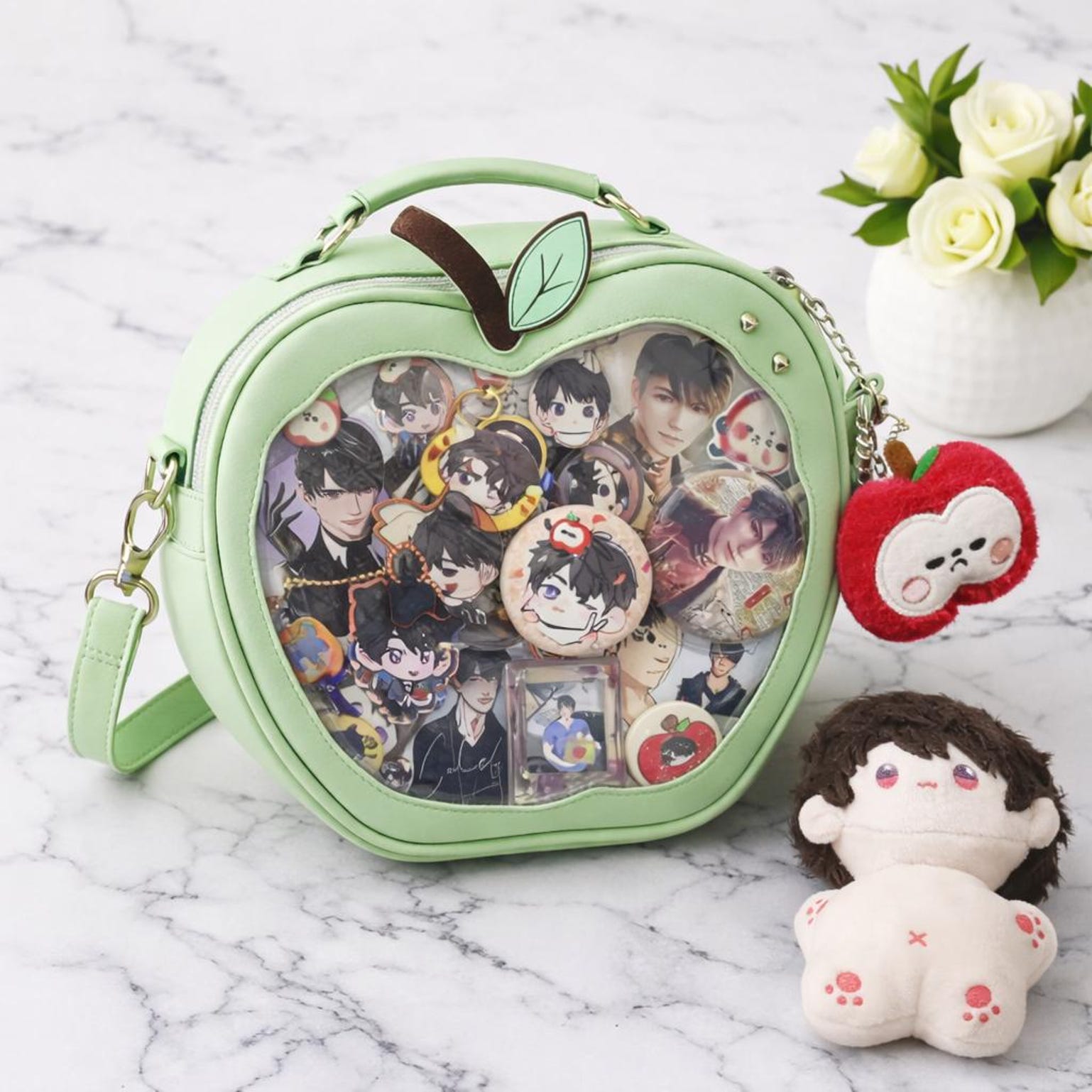
An ita bag is built around display. The clear window on the outside IS the primary feature. The bag exists to show your fandom merchandise to the world — your pin collection, keychains, acrylic standees, photocards — as a public expression of your identity and enthusiasm for a character or series. Storage is included, but it’s a secondary consideration. You judge an ita bag partly by how well it holds things and partly by how well the window showcases your setup.
This distinction matters because it changes every downstream decision. If display is not a priority for you — if you don’t have fandom merch you want to show, or if you’d rather keep the contents of your bag private — then an ita bag is adding cost and structure for a feature you won’t use. If display IS the point, then a regular bag is missing the one feature that makes the product worthwhile.
The question is not “which bag is better” but “which bag’s primary function matches what I actually want from a bag right now?”
Featured Ita Bags
Free shipping on orders over $75 — 500+ styles, inserts, and accessories in stock.


How the structure differs
The structural differences between an ita bag and an equivalent regular bag come down to one key addition: the sealed display compartment behind the clear window.
A regular bag has a main compartment with interior pockets, dividers, and sometimes a laptop sleeve. Everything is enclosed and hidden. The outer panels are solid fabric, leather, or synthetic material — there are no transparent surfaces, no dedicated insert slots, and no merch-facing design decisions.
An ita bag has all of that, minus some interior volume, plus a dedicated window compartment. The window area is a separate, sealed chamber inside the bag — not the main compartment. It sits behind the clear PVC or TPU panel and has its own opening (usually a zipper on the bag’s back panel or interior side) to slide the insert in and out. Because this compartment takes up physical space in the bag’s body, the main compartment is proportionally smaller than it would be in an equivalent regular bag of the same exterior size.
This is worth stating clearly: an ita bag and a regular bag of the same exterior dimensions do not have the same storage capacity. The display compartment takes space that would otherwise be interior volume. If you’re comparing a 30×25×12cm ita backpack with a 30×25×12cm regular backpack, the regular backpack will hold more. The trade is deliberate — you’re trading storage space for the display compartment.
Weight is also affected. Ita bags are slightly heavier than equivalent regular bags at baseline because of the additional window panel structure. Once you load pins and acrylic standees into the display, that weight accumulates. Heavy pins are dense metal — 20–30 large enamel pins can add 200–400 grams to a bag’s carried weight.
How the carry experience differs
In terms of ergonomics and day-to-day carry, the main practical differences between an ita bag and a regular bag are: visibility, weather resistance, and social context.
Visibility and access: A regular bag’s contents are invisible. No one knows what’s inside unless you open it. An ita bag’s display is visible from the outside at all times — that’s the point. This also means the display is exposed. The PVC or TPU window is not as scratch-resistant as a solid fabric panel, and the items behind the window can shift if the insert isn’t well-loaded. Some collectors remove the insert for travel and replace it when they arrive at their destination.
Weather resistance: Regular bags — especially those made from nylon, canvas, or leather — handle rain and moisture reasonably well on all surfaces. With an ita bag, the window panel is the weak point. Standard PVC windows are water-resistant but not waterproof, and getting the window heavily saturated can let moisture through to the display compartment. Items behind the window (paper photocards, paper-backed badges) can be damaged by moisture. Higher-quality ita bags use TPU windows that resist moisture better, but in heavy rain, covering the window is a practical precaution.
Social experience: Regular bags are functionally invisible in social contexts — people don’t typically comment on them. Ita bags attract attention and often start conversations with other fans. At conventions, an ita bag is practically a social signal: it communicates fandom affiliation and invites interaction with other fans who recognize the merch. This is a genuine feature for many buyers. In non-fan contexts — offices, formal settings, or environments where you want to move without notice — it’s a consideration.
When an ita bag makes more sense than a regular bag
An ita bag is the right choice when the display function is actively useful to you — not just something you’d tolerate, but something that adds real value to how you carry the bag.
- You have fandom merchandise — enamel pins, keychains, photocards, acrylic standees — that you want to display publicly rather than keep at home or hidden in a bag.
- You attend anime conventions, fan events, idol concerts, or similar gatherings where the display is socially meaningful and invites interaction with other fans.
- The aesthetic of a curated merch display matters to you — you enjoy designing and updating the layout, and the bag is an expression of your fandom identity.
- You’re a collector who wants your everyday carry to reflect your interests, similar to how someone might wear fandom T-shirts or jewelry.
- You want a conversation piece that signals your fandom affiliation without needing to explain it verbally.
In these situations, the trade-offs — slightly less storage, heavier when loaded, window requires care — are worth it because the display function is the reason you want the bag in the first place.
When a regular bag is still the better choice
A regular bag remains the better choice when your primary need is storage, protection, or anonymity — and the display function would be unused or actively inconvenient.
- You need maximum storage in minimum weight. A regular bag of the same size will hold more, period.
- You work in a formal or professional environment where displaying fandom merchandise would be inappropriate or uncomfortable. Even if you could remove the insert, the bag structure still signals “fan bag.”
- You carry fragile or valuable items that need the bag to be fully sealed, weather-resistant, and jostled as little as possible. A display window introduces a structural panel that pins can press against, and the window itself is less robust than solid fabric.
- You travel frequently and need a bag that handles varied weather conditions and rough handling without special care for a clear window panel.
- You don’t currently have fandom merch to display. Buying an ita bag before you have anything to put in the window means carrying around an empty display — which defeats the purpose and looks awkward.
| Factor | Regular bag | Ita bag |
|---|---|---|
| Primary function | Storage and carry | Merch display |
| Merch visibility | Hidden | Visible from outside |
| Storage capacity | Higher per same exterior size | Lower (window compartment takes space) |
| Weather resistance | Usually better across all surfaces | Window can be damaged by prolonged moisture |
| Weight when loaded | Lighter — contents depend on what you carry | Heavier when pins and standees are added |
| Social experience | Anonymous | Conversation-starting in fan contexts |
| Price range | Wide — $10 to $500+ | Typically $20 to $100+ for most styles |
Most collectors who use ita bags don’t replace their regular bags entirely. They use an ita bag for specific situations — fan events, casual outings where they want to show their collection — and a regular bag for everything else. Treating it as an addition to your carry rotation rather than a replacement makes the trade-offs easier to live with.
Shop Popular Ita Bags
Clear window styles, mini crossbodies, convention backpacks, and starter kits — the most popular picks from YourItBag.


FAQ
Can I use an ita bag as my only bag?
Yes. Many collectors use ita bags as their primary daily bag without issue. The key is making sure the bag has enough interior storage for your essentials alongside the display compartment. Larger crossbody bags and backpacks typically have enough room for a wallet, phone, keys, and small items in the main compartment, even with the display area taking up its share of the bag’s volume. Check the product listing for interior dimensions, not just the exterior bag size, before buying for daily carry.
Do ita bags look strange in professional or formal settings?
A fully decorated ita bag with a dense pin layout will stand out in most office or formal environments. Some collectors handle this by having two inserts — a decorated display insert for personal use and a plain or empty insert for work situations. Others simply don’t carry their ita bag to work and use a regular bag for professional settings. An ita bag with a minimal or empty display can pass as an unusual but not inappropriate bag in casual professional environments, but that depends on the workplace culture.
Is an ita bag more expensive than a regular bag?
Not necessarily. Entry-level ita bags start around $20–30, which overlaps with the price range of many casual regular bags. Standard crossbody and messenger ita bags typically run $30–60. Larger backpack formats or bags with premium materials run $60–100+. High-end ita bags from established Japanese brands or handmade artisan sellers can cost more than that, but they’re comparable in price to mid-range regular bags from mainstream fashion brands. The added cost relative to a similar regular bag is usually $10–20 for the window and insert compartment construction.
Will the clear window scratch or yellow over time?
PVC windows can develop fine surface scratches from regular handling and can yellow with prolonged UV exposure — a process that accelerates with direct sunlight. The rate of yellowing depends on the PVC quality; cheap PVC turns yellow faster than thick or UV-stabilized PVC. Higher-quality bags use TPU (thermoplastic polyurethane) windows, which are clearer, more scratch-resistant, and significantly more resistant to yellowing. To extend the life of any window: store the bag away from direct sunlight when not in use, and avoid pressing the window against rough surfaces. Once a window yellows significantly, it’s usually not reversible, but it doesn’t affect the bag’s function.
Compare ita bags in the shop
Ready to find the right ita bag? Browse all styles by type and size, or read the complete guide to match the bag format to your merch and carry situation before buying.
Browse All Ita Bags Full Shop Archive Complete Ita Bag Guide
New to ita bags? Start here: What is an ita bag? Everything you need to know →
Further Reading
Written and maintained by the YourItBag editorial team, drawing on product testing, collector community feedback, and ongoing market research.
