
Ita Bag Blog
How to Put Acrylic Stands and Keychains in an Ita Bag
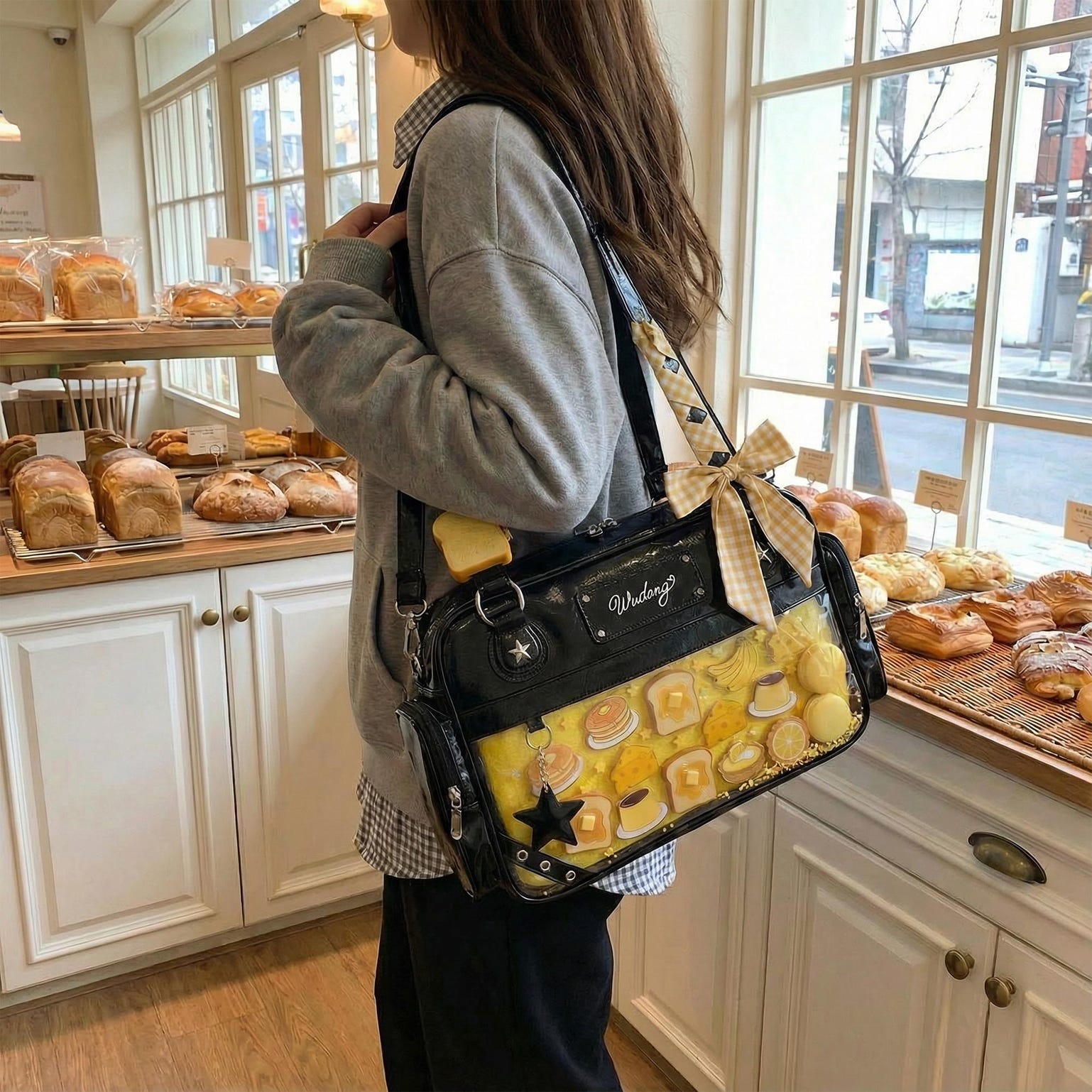
Acrylic Stands & Keychains in Ita Bags
How to put acrylic stands in an ita bag — and how to put keychains in ita bags — without them falling, tilting, or scratching the window. Covers insert requirements, placement techniques, and what actually holds each merch type in place.
This guide covers how to put acrylic stands in ita bag windows specifically, plus ita bag keychains — clips, charms, and strap accessories that complement the display.
The same setup logic applies to ita bag plush — soft plushie figures placed in the display window using the same depth, insert, and adhesive techniques as acrylic stands.
Acrylic stands and keychains are the two merch types that collectors most often struggle to display in an ita bag. Pins go straight into foam board. Photocards lay flat. But acrylic stands need depth and a stable base, and keychains need anchoring so they hang in place rather than piling at the bottom. This guide covers both, in detail.
What You Need Before You Start
The setup requirements are different depending on which merch type you are placing. Check both lists if you are adding both to the same bag.
For acrylic stands:
- An ita bag with a window deep enough to fit the stand upright — most acrylic stands are 7–15cm tall and need at least 3–5cm of window depth
- A rigid insert (foam board, plastic canvas, or thick felt-backed board) — soft foam alone will not hold the stand base stable
- Removable adhesive putty, museum putty, or a small clip/stand holder to secure the base
- A thin felt or microfiber cloth layer between stand base and window if the window is PVC (soft PVC scratches easily)
For keychains:
- An insert with holes or mesh for threading — plastic canvas mesh is ideal, foam board works if you push a pin through it to create an anchor point
- Short safety pins or bar pins if the keychain clip needs pinning to fabric
- A display strategy: decide whether keychains will hang inside the window or clip to the outside of the bag
Shop Popular Ita Bags
Free shipping on orders over $75 — 500+ styles, inserts, and accessories in stock.
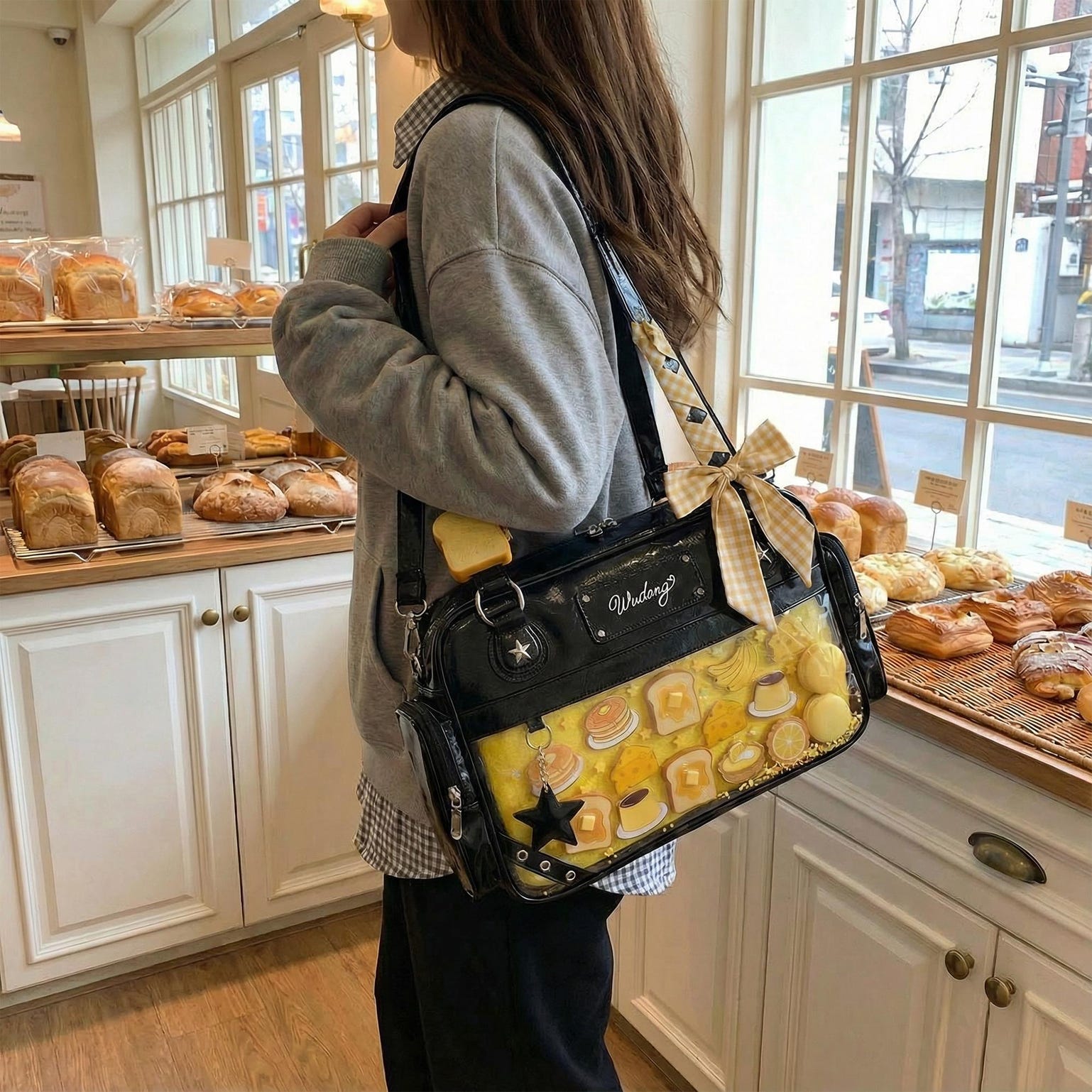
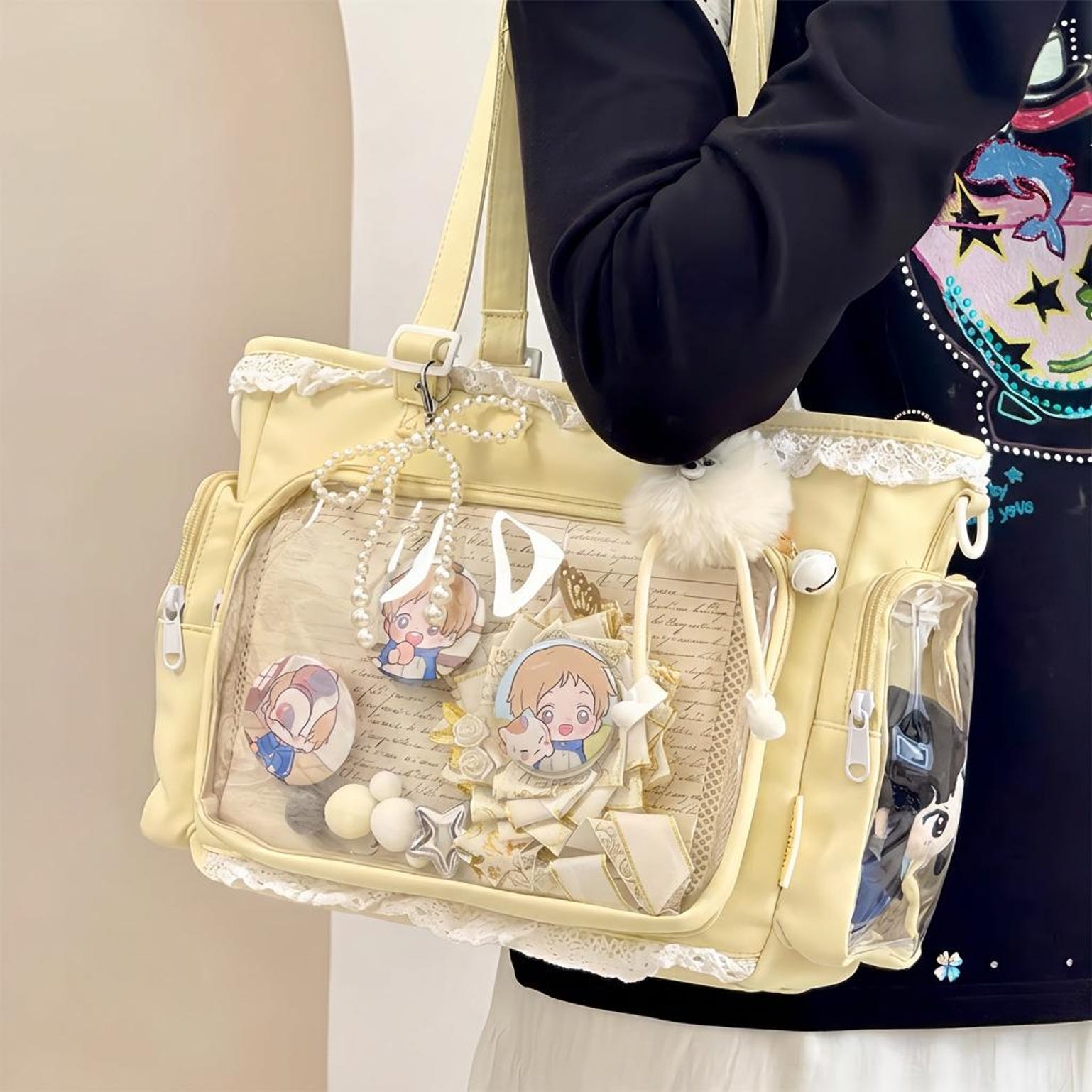
How to Put Acrylic Stands in an Ita Bag
Knowing how to put acrylic stands in an ita bag correctly means understanding the three things that cause failure: the base slipping, the stand tilting, and the base scratching the window. All three are preventable.
- Check window depth first. Measure from the clear window to the back of the display pocket. The stand needs to fit upright without the top leaning into the window. Backpack-style ita bags typically have 4–6cm of depth; flat crossbody bags may only have 2–3cm, which limits stand height.
- Place the insert. A rigid insert behind the stand is essential. Foam board (4–6mm thick) works well. If the bag came with a soft insert, consider adding a piece of plastic canvas or thin foam board inside it. The insert gives the stand base something firm to sit on — without it, the base sinks and the stand tilts forward into the window.
- Secure the base with putty or a clip. Apply a small amount of removable adhesive putty to the base of the acrylic stand and press it against the insert. This prevents sliding when the bag moves. Museum putty (Blu-Tack or equivalent) is the most popular option — it holds firmly enough for daily carry but peels off cleanly.
- Position stands at center or slightly back. Place the acrylic stand so its face reads clearly through the window. If the stand has printed art on one side, face that side toward the window. Position it center-back of the display pocket so the image fills the window frame.
- Add a scratch guard if needed. For PVC windows (the soft, flexible type), put a thin piece of felt or microfiber cloth between the stand base and the window. This prevents the acrylic edges from scratching the window over time. Hard acrylic windows do not need this.
- Test movement before going out. Close the bag and shake it gently. The stand should stay upright. If it tips or slides, add more putty or switch to a firmer insert.
One common mistake when figuring out how to put acrylic stands in an ita bag: choosing a bag with too little window depth. A 20cm-tall acrylic stand will not stand up in a bag where the display pocket is only 2cm deep. If you are buying a bag specifically for standing displays, look for listings that state the window depth, not just the window width.
How to Put Keychains in Ita Bags
How to put keychains in ita bags depends on the keychain type and whether you want them displayed inside the window or hanging outside the bag. Both approaches work — they just use different attachment methods.
Inside the window display
Keychains inside the window sit against the insert. The goal is to prevent them from piling at the bottom of the bag when you walk.
- Plastic canvas insert: Thread the keychain’s ring or clip directly through a hole in the plastic canvas mesh. This is the most stable method — the chain stays exactly where you placed it. Plastic canvas has a grid of open holes every 4–5mm, so almost any clip or ring will fit.
- Foam board insert: Use a short T-pin or locking pin back pushed through the foam to create an anchor. Clip the keychain ring to the T-pin. This works well but leaves small holes in the foam over time.
- Fabric-covered insert: Use a bar pin safety-pinned to the fabric backing. Clip the keychain to the bar pin. Cleaner appearance, easy to reposition.
Hanging outside the bag
Most ita bags have D-rings or lobster-clip attachment points on the straps, corners, or zipper pulls. Keychains clip here directly. This is simpler and keeps the window clear for pins or photocards. The trade-off: keychains hanging outside swing and clink when walking, and can catch on things.
For long keychains (acrylic charms with a 10cm+ chain): attach outside the bag rather than inside the window. Inside, a long chain will bunch at the bottom and cover other merch.
Arranging multiple keychains
When placing several keychains inside the window, start with the heaviest or largest keychain at the center. Work outward. Keep shorter chains higher up — they will not obscure pieces below them. Avoid overlapping the chain portion of two keychains, as they tangle when the bag moves.
Mixing Acrylic Stands and Keychains in One Display
Acrylic stands and keychains can share a window, but they occupy different depth zones. A stand sits upright near the back of the display pocket. Keychains hang flat against the insert face. They rarely compete for the same space if you plan placement in advance.
A workable mixed layout:
- Acrylic stand at center-back, secured with putty — takes up depth but minimal surface area
- Pins on the insert face around the stand base to fill the lower portion of the window
- One or two small keychains clipped near the top of the insert to frame the stand without blocking it
- Longer keychains on the outside of the bag so they do not crowd the window
The main error in a mixed display: placing acrylic stands and keychains at the same depth plane. The stand needs rear placement; keychains at the same back position will be hidden behind it. Separate the layers and the display works cleanly.
Insert Requirements by Merch Type
| Merch type | Insert type needed | Attachment method |
|---|---|---|
| Acrylic stands (7–15cm) | Rigid foam board or plastic canvas | Adhesive putty on base |
| Enamel pins | Foam board (4–6mm) | Pin back straight through foam |
| Keychains (clip-on) | Plastic canvas mesh or fabric insert | Clip through mesh hole or bar pin |
| Photocards | Flat firm board (no holes needed) | Sleeve adhesive or putty on back |
| Small plushies | Deep-pocket bag, no insert required | Sit in pocket, putty for base |
The most common mistake is using a single soft foam insert for everything. Soft foam compresses under the weight of a heavy acrylic stand, causing it to tilt. For mixed collections, layer a rigid base board behind the softer display surface, or use plastic canvas which handles multiple attachment methods simultaneously.
Common Problems and Fixes
Acrylic stand keeps tilting forward
The insert is too soft or the window depth is too shallow. Add a rigid board behind the existing insert, or use more putty on the stand base. If the bag window is under 3cm deep, that stand height may simply not fit upright in this bag — consider a backpack-style ita bag with a deeper window pocket.
Keychains all pile at the bottom when walking
The keychains are hanging freely inside the window without anchoring. Use a plastic canvas insert and thread the clip through the mesh, or use bar pins to anchor each keychain at a fixed point on the insert. This stops gravity from collecting them at the lowest point.
Keychain chains tangling with each other
Space the anchor points further apart, and position shorter-chain pieces higher on the insert. Avoid placing two keychains directly adjacent when both have long dangling chains. Moving one to the outside of the bag immediately eliminates the tangle.
Acrylic stand scratching the window
A layer of thin felt, microfiber cloth, or even a sleeve of clear display plastic between the stand and the window prevents scratching. This matters most for PVC windows. Secure the felt to the back face of the stand with a small amount of putty so it stays in place.
Keychains making the display look cluttered
Reduce the number of keychains inside the window to two or three and move the rest outside. Keychains add visual noise faster than pins or photocards. A single bold keychain at the top of a pin display reads well; six keychains at different lengths creates visual chaos.
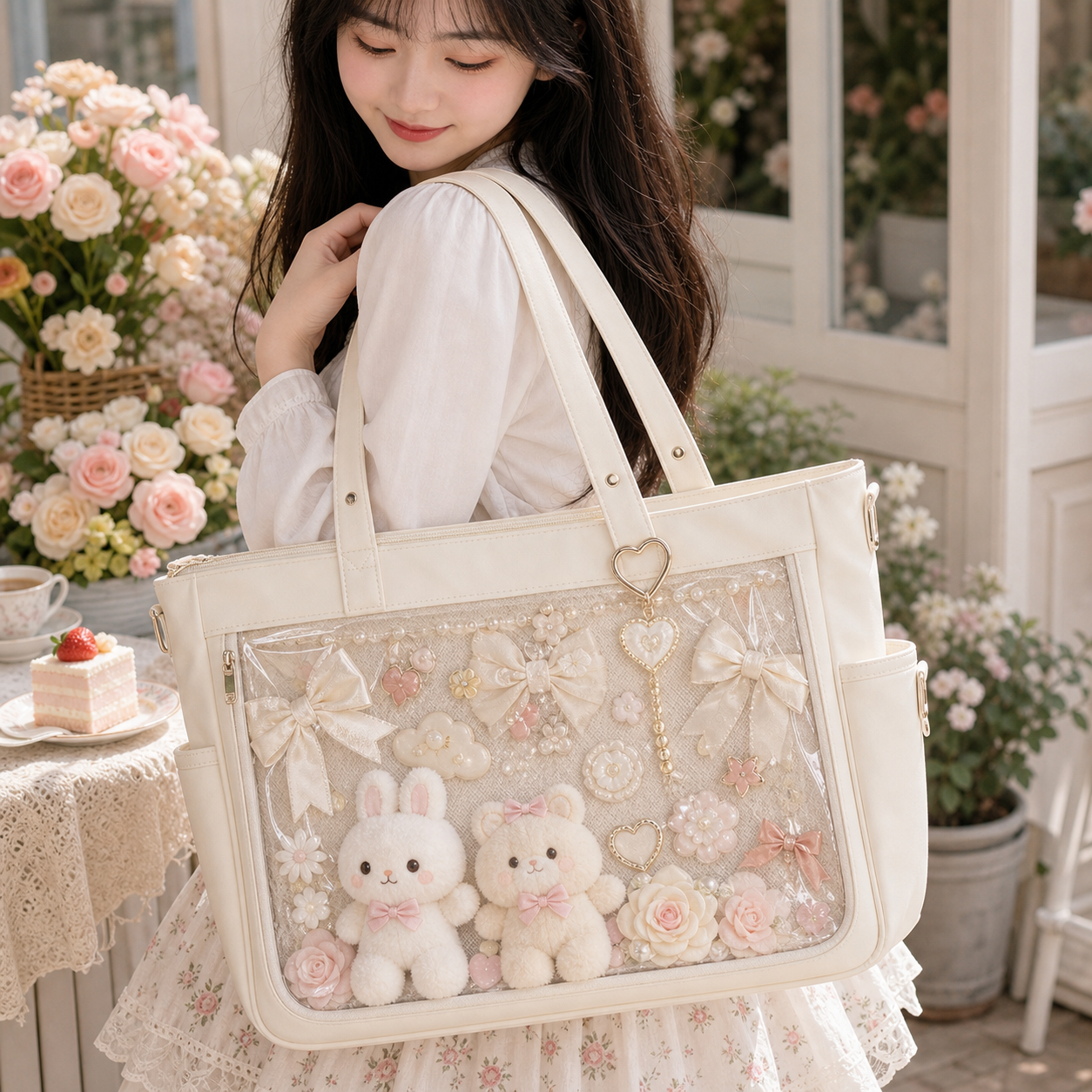
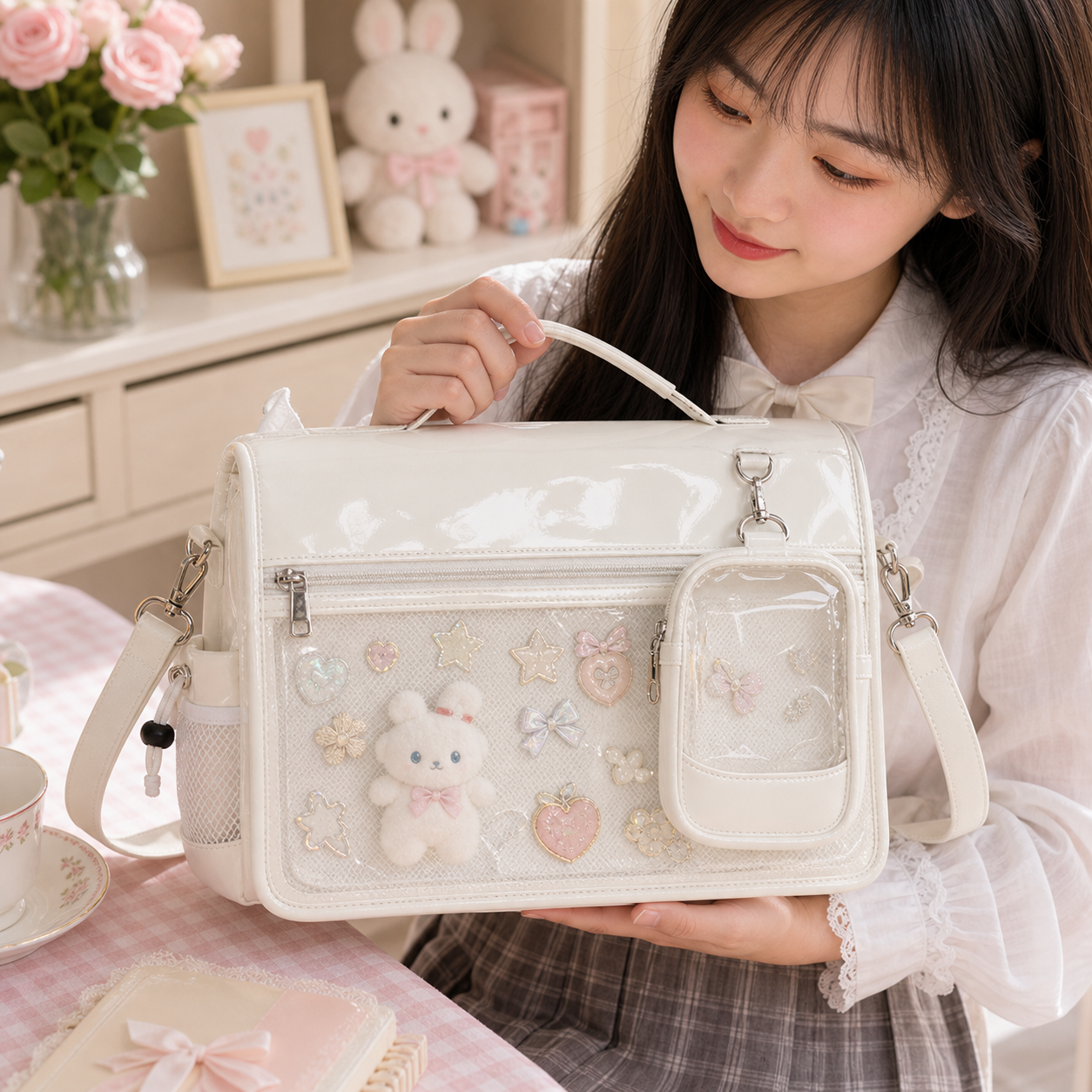
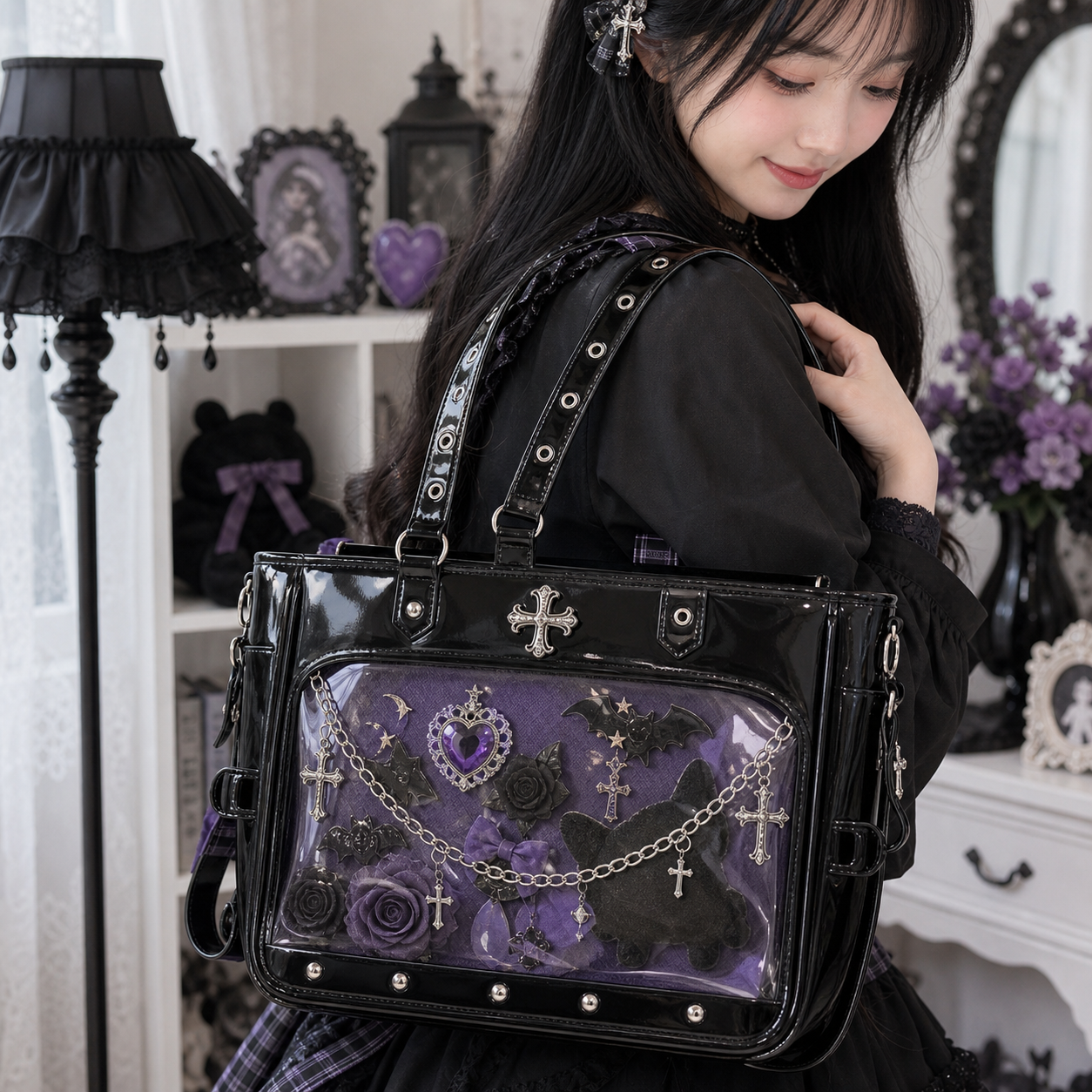
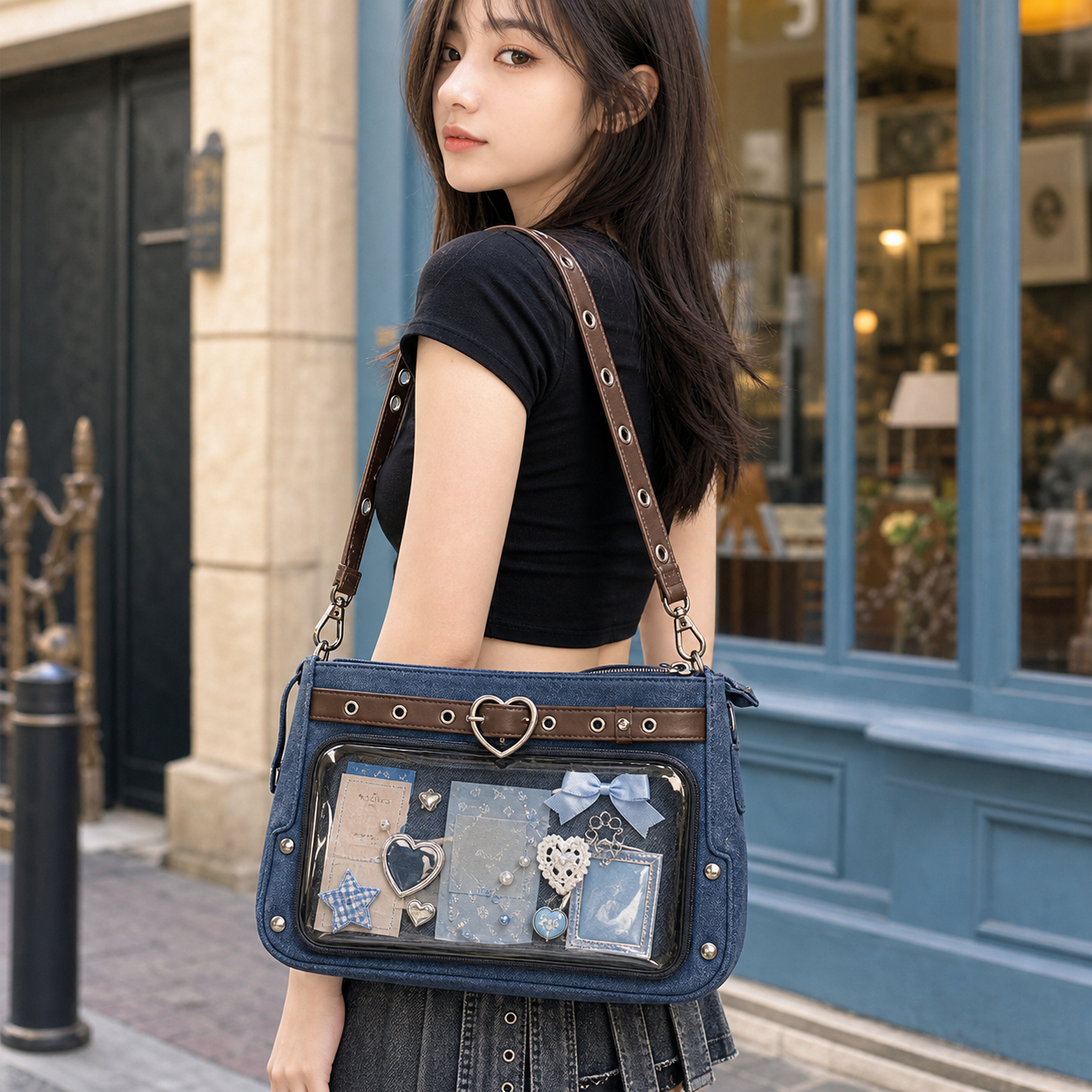
Shop Popular Ita Bags
Explore our top picks — clear-window bags ready to ship.
FAQ
How do you put acrylic stands in an ita bag without them falling?
Use removable adhesive putty (museum putty / Blu-Tack) on the base of the acrylic stand and press it firmly against a rigid insert inside the window pocket. The insert needs to be hard enough that the stand base does not compress into it — foam board (4mm+) or plastic canvas works well. Soft inserts let the stand tip over when the bag moves. After placing the stand, shake the bag lightly to test hold before going out.
How do you put keychains in ita bags?
For inside-window display: clip the keychain ring through a hole in a plastic canvas insert, or use a T-pin or bar pin anchored to foam board as an attachment point. For outside display: clip the keychain directly to a D-ring or zipper pull on the bag exterior. Keychains placed loosely inside the window without an anchor will pile at the bottom of the bag when you walk.
What size ita bag do I need for acrylic stands?
Check the window depth spec in the listing, not just width and height. Most standard K-pop and anime acrylic stands are 7–12cm tall and need 3–5cm of window depth to stand upright. Backpack-style ita bags typically have 4–6cm depth. Flat crossbody bags may only have 2–3cm, which limits you to shorter or base-heavy stands. A bag’s main compartment depth is not the same as the window pocket depth — check both if you can.
Can I mix acrylic stands, keychains, and pins in the same window?
Yes, but use depth zones: stand at the back secured with putty, pins in the insert face around the stand, keychains clipped near the top of the insert or outside the bag. The mistake is placing all three at the same depth — keychains behind the stand will be hidden, and a stand placed at the insert surface will block everything behind it. Plan placement in layers before securing anything.
Do acrylic stands damage ita bag windows?
The sharp edges of an acrylic base can scratch soft PVC windows over time with normal movement. Place a thin piece of felt or microfiber cloth between the stand base and the window to prevent this. Hard acrylic windows (rigid, not flexible) are more scratch-resistant and generally need less protection. If your bag has a soft, flexible window, the felt layer is worth adding.
What type of insert is best for keychains?
Plastic canvas mesh is the best insert for keychains. Its grid of open holes lets you thread any ring or clip directly through the insert at any position, creating a stable fixed anchor without adhesive or pins. Foam board also works if you push T-pins through it as anchor points. A plain cardboard insert with no attachment points will not hold keychains in a fixed position — they will slide to the bottom.
Find Ita Bags Built for Acrylic Stands and Keychains
The right bag makes all the difference. Look for ita bags with deep window pockets (4cm+), included rigid inserts, and D-ring attachment points for outside keychain display. Browse by carry format to find one that works for how you actually use it.
New to ita bags? Start here: What is an ita bag? Everything you need to know →
Further Reading
Written and maintained by the YourItBag editorial team, drawing on product testing, collector community feedback, and ongoing market research.
