Ita Bag Glossary: 30+ Terms Every Collector Should Know | YourItBag
YourItBag Editorial

Ita Bag Glossary: 30+ Terms Every Collector Should Know

New to ita bags or tired of running into terms you don’t recognize? This glossary covers every word you’ll encounter — from the Japanese originals to the community slang used in hashtags and shopping posts today.

The ita bag world has its own vocabulary — part Japanese fandom culture, part Western collector slang, part shopping shorthand. If you’ve seen words like “rosette,” “shrine bag,” or “plastic canvas insert” and weren’t sure what they meant, this glossary has you covered. Every term here is one you’ll actually encounter when buying, building, or talking about ita bags online.

Start with the core terms if you’re new. Jump to the community or shopping sections if you’re already past the basics. Related reading: The Complete Ita Bag Guide and the Ita Bag shop.

Core bag terms every collector should know

These are the foundational terms. If someone sends you a link to an ita bag listing or a setup photo and you don’t know what you’re looking at, start here.

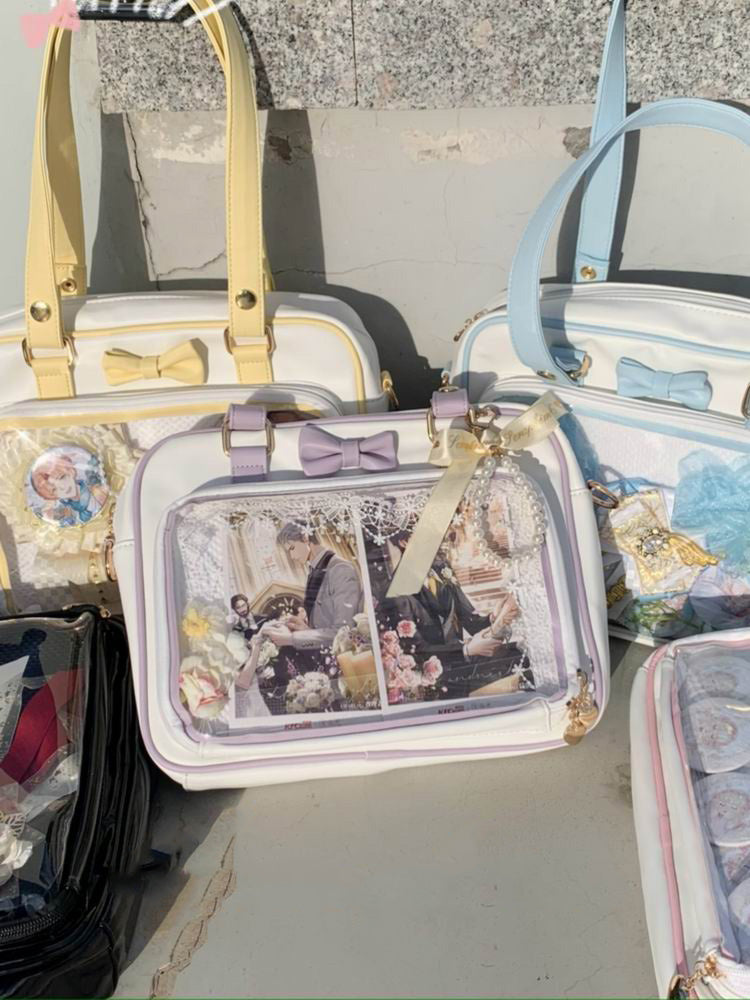
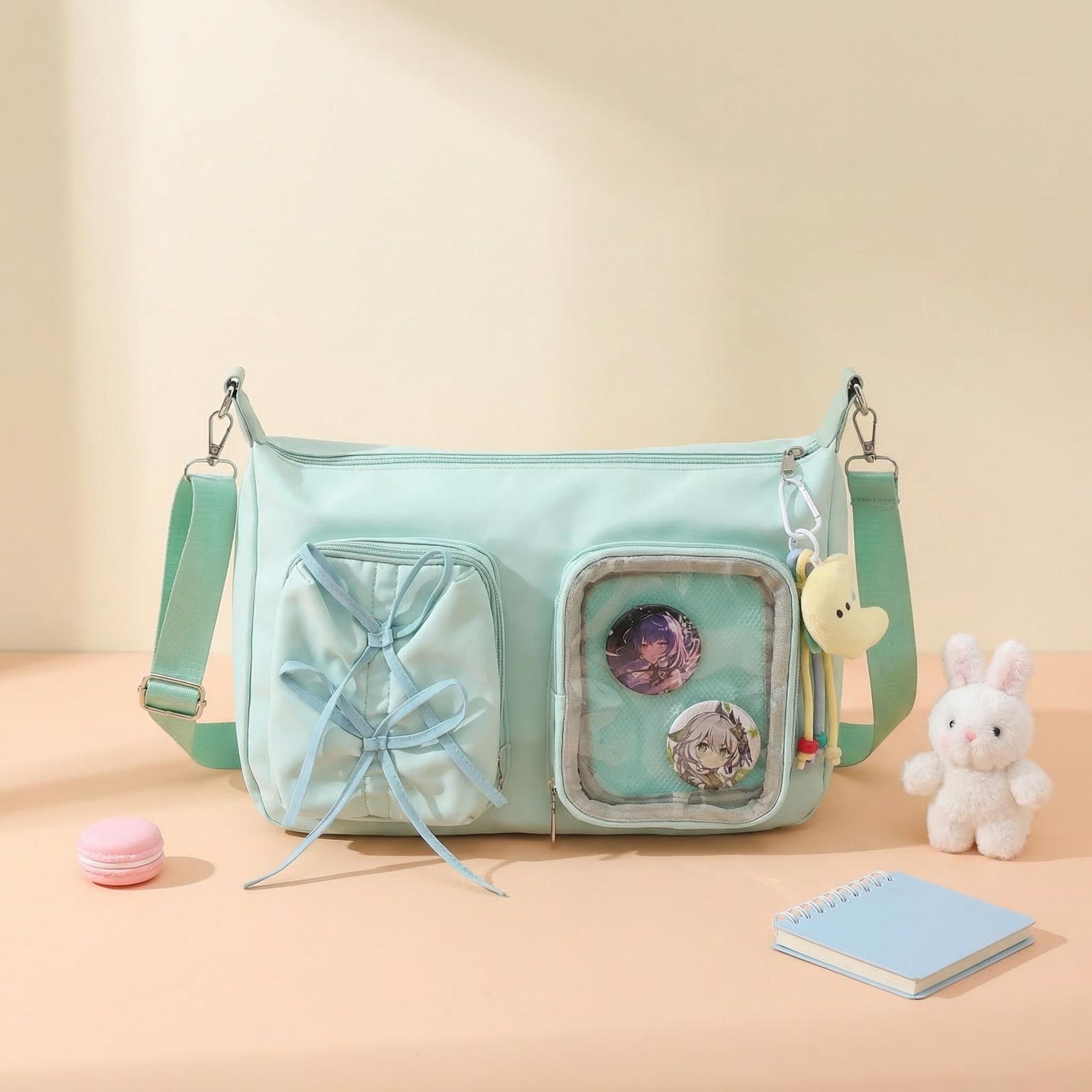
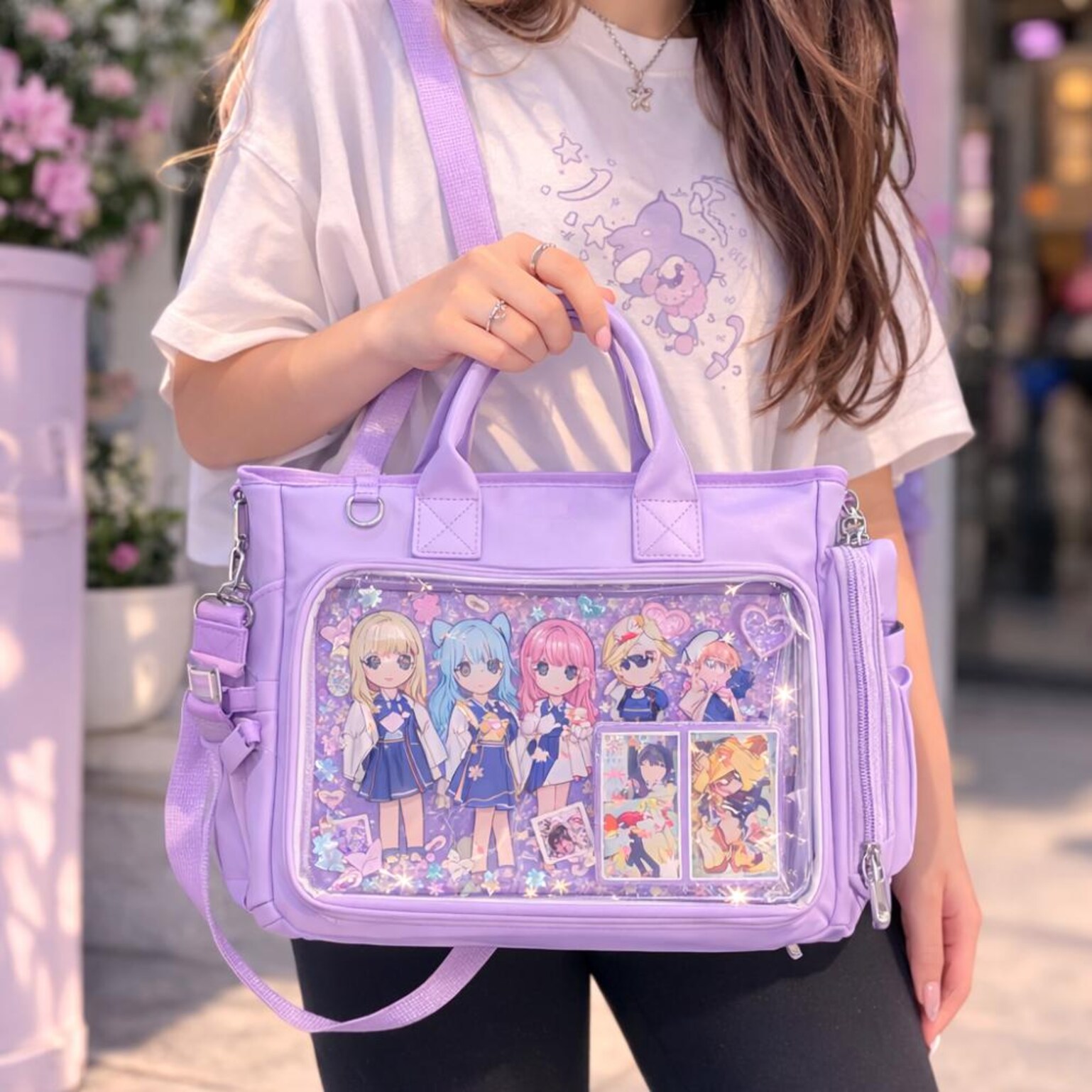
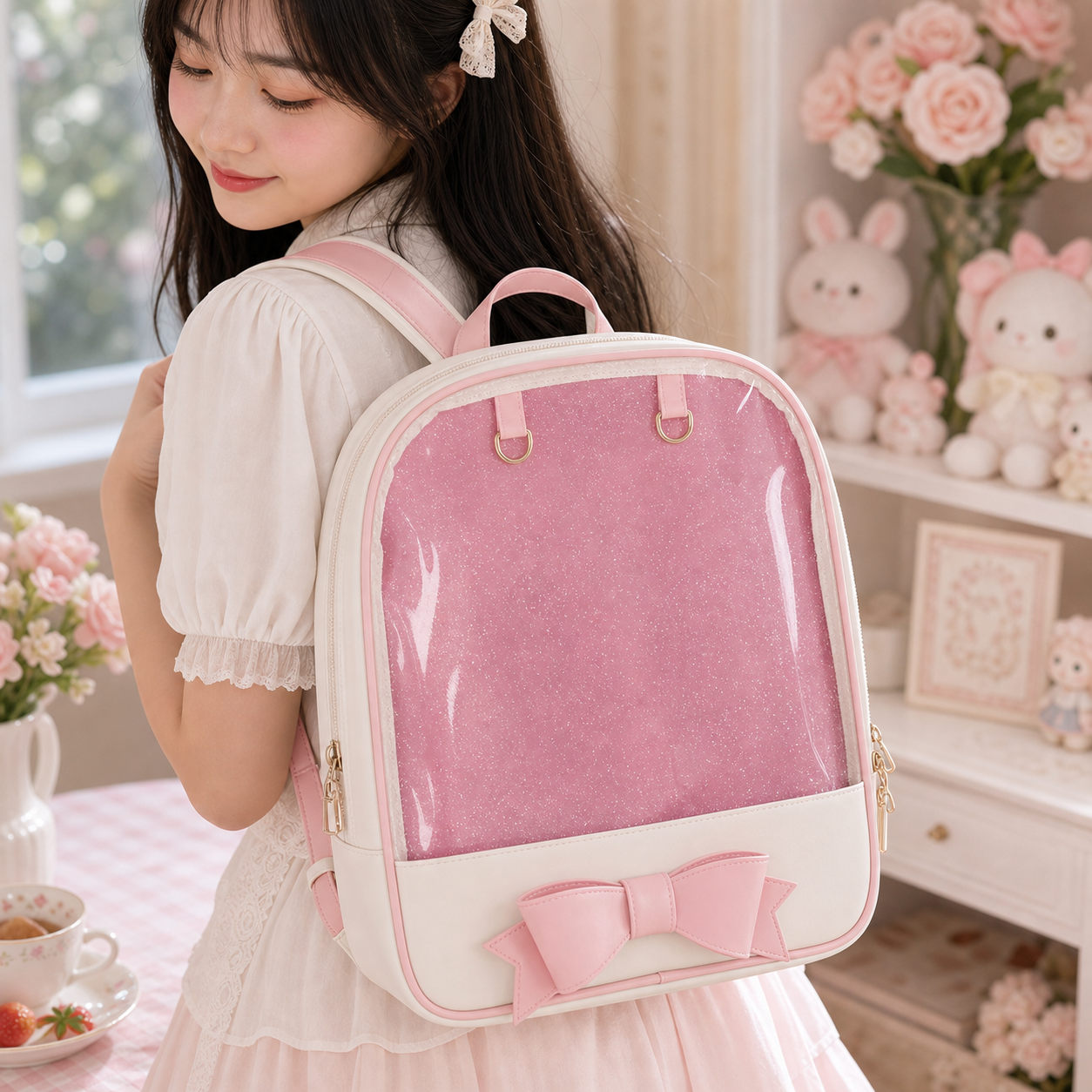
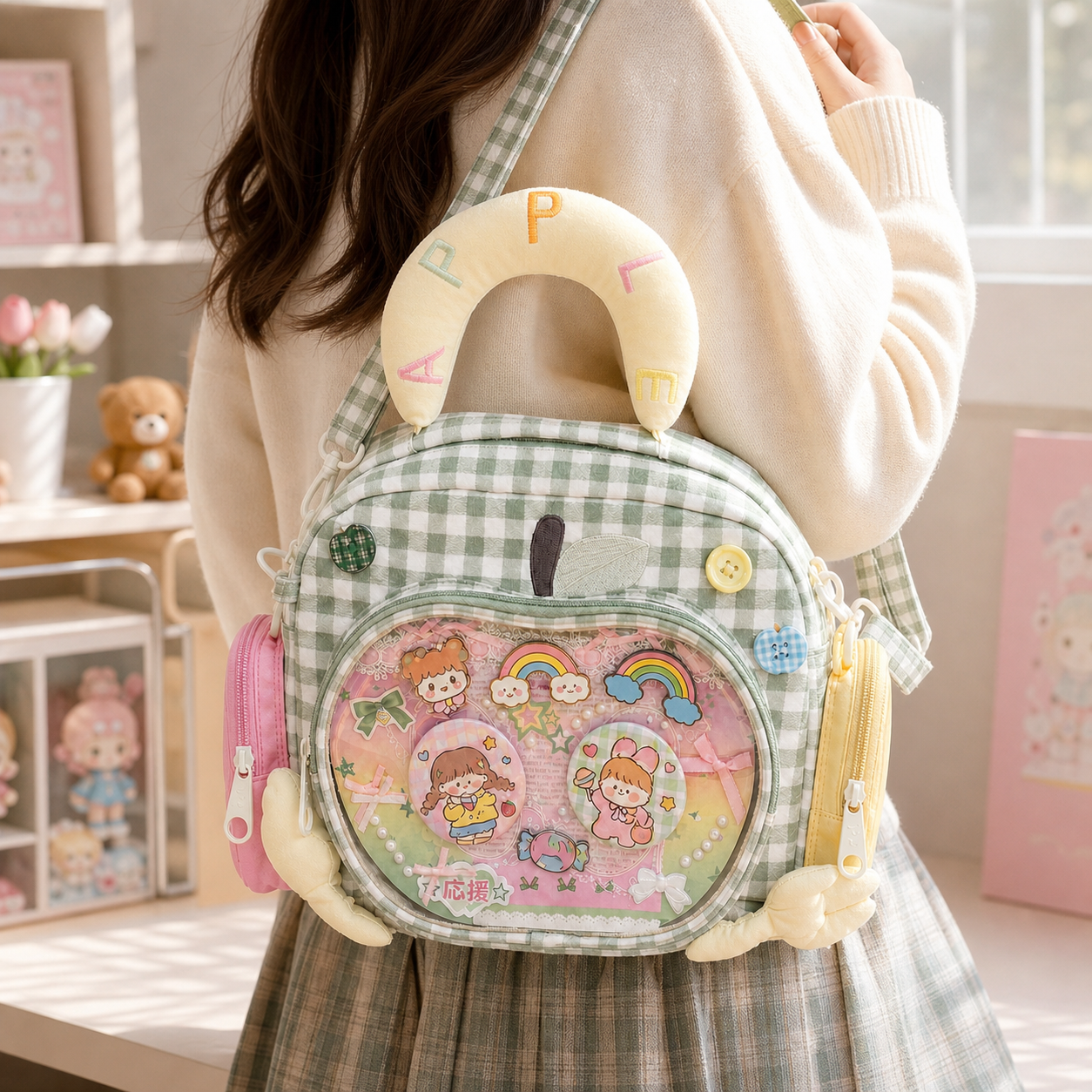
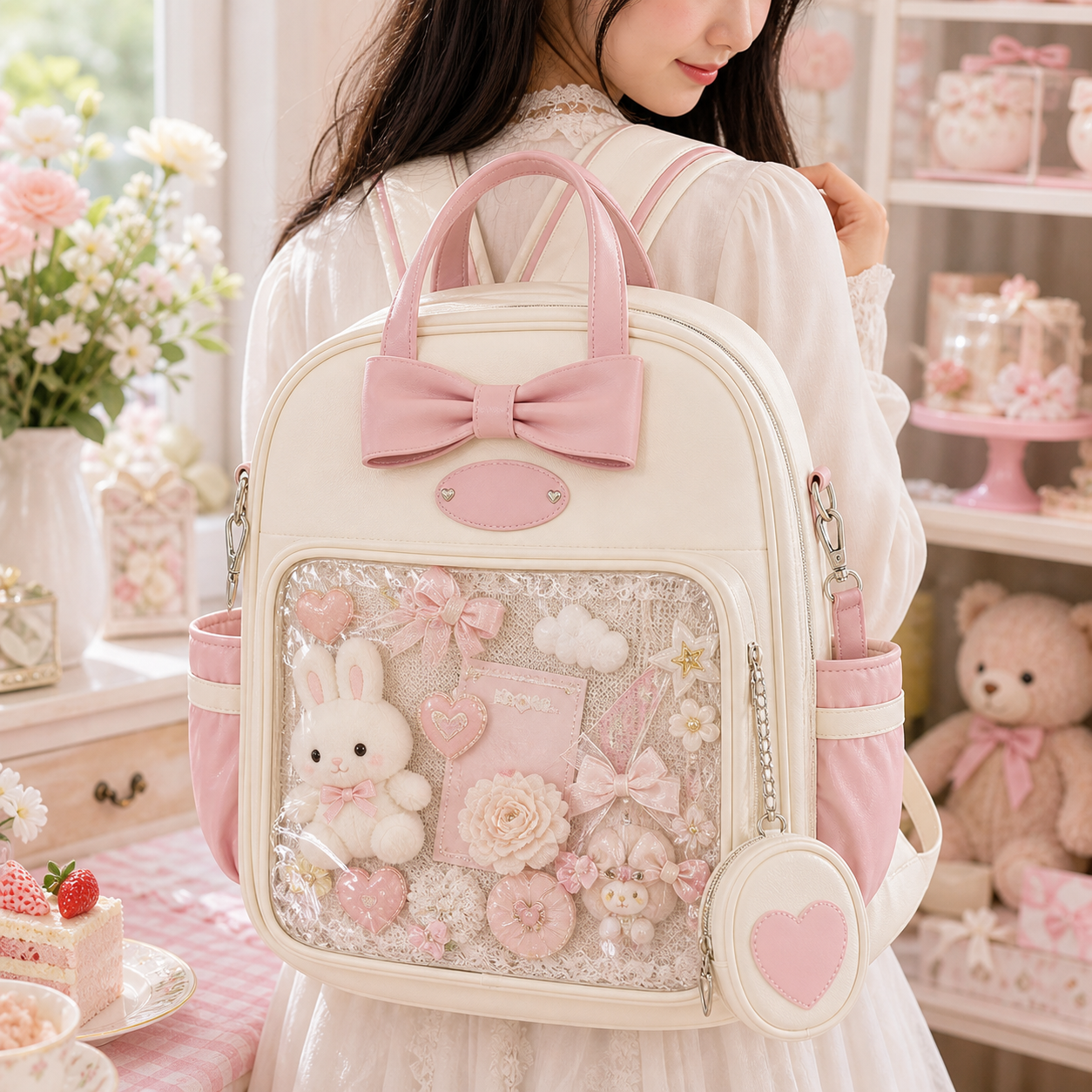
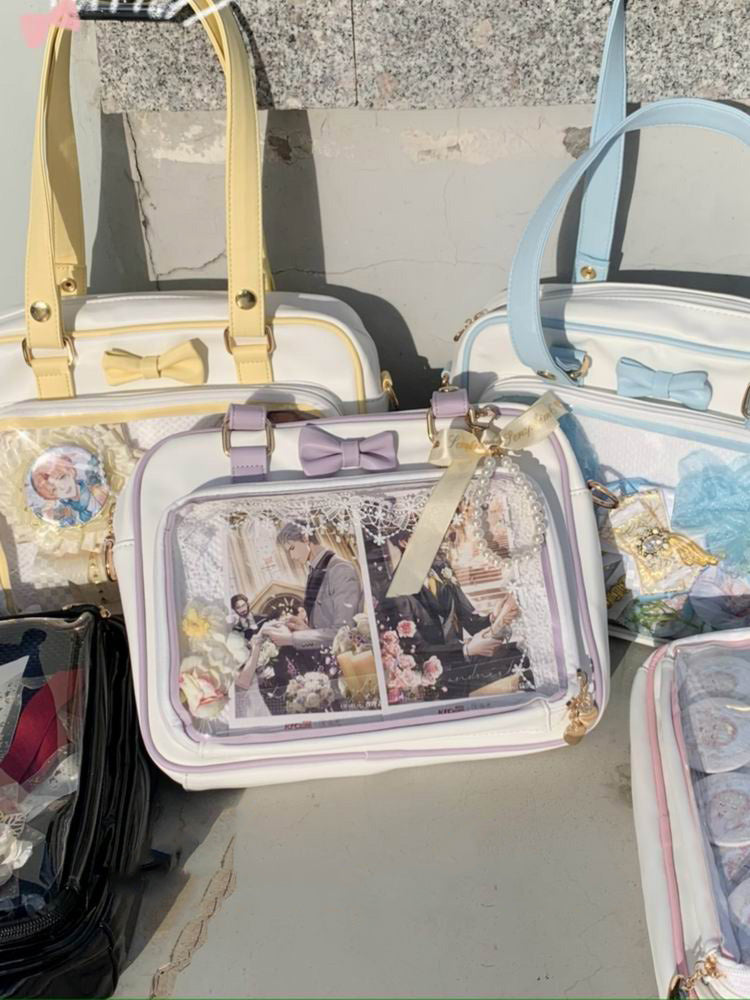
  • Ita bag (痛バッグ / itabag): A bag with a transparent display window, designed specifically for showing fandom merchandise on the outside. The window is typically at the front or a full side panel. “Ita” (痛) means “painful” in Japanese — as in, painfully devoted to a character. The full word itabag has been shortened to ita-ba (痛バ) in Japanese communities.
  • Clear window: The transparent panel — usually PVC (polyvinyl chloride) or TPU (thermoplastic polyurethane) — that makes the display visible from outside the bag. TPU windows tend to be clearer and more scratch-resistant than standard PVC. The window is sealed into the bag structure, not a separate add-on.
  • Insert: A removable flat panel that sits inside the window compartment. You pin or attach your merch to the insert, then slide it into the bag. Most bags ship with one insert included. The insert is the part you actually decorate. See the Insert and display terms section for more detail.
  • Ita-ba (痛バ): Japanese abbreviation of itabag. Used in Japanese-language hashtags (#痛バ) and community posts. If you’re looking at Japanese ita bag content on social media, this is the tag to search.
  • Window pocket / display compartment: The dedicated sealed compartment behind the clear panel. It’s physically separate from the bag’s main interior storage. The window pocket is where the insert sits. Its dimensions determine the usable display area — always check this measurement against your insert or merch before buying.
  • Double window: A bag with two separate display areas — typically front and back, or front and side. Double window bags offer twice the display space but are larger and harder to pack fully. Common in convention-focused designs.

One thing to check on any ita bag listing: the actual window dimensions. Listings often show the full bag size but not the window size. The window is smaller than the bag. If you’re buying accessories for a specific insert size, confirm the window measurement first. The shop lists window dimensions on individual product pages.

Insert and display terms

The insert is where most ita bag setup decisions happen. Understanding the different insert types helps you pick the right one for your merch and avoid buying one that won’t hold pins properly.

  • Fabric insert: A panel covered in soft fabric — often velvet, canvas, or felt. Pin clutches grip into the fabric without punching through, which protects the pin backing. Velvet inserts hold pins very securely and look clean in photos. Best for enamel pin displays.
  • Foam insert: A rigid foam backing, similar to craft foam or display foam. Pins pierce and hold in the foam itself. Gives a firmer surface than fabric, which is useful for heavier pins or large acrylic standees. The trade-off is that over time, repeated pinning creates small holes in the foam surface.
  • Plastic canvas insert: A lightweight mesh-like rigid plastic panel used in DIY setups. It can be cut to size, paired with fabric or batting on top, and customized easily. Popular in handmade ita bag communities. Inexpensive to source and replace.
  • Insert size: The physical dimensions of the display area, usually given in centimeters. Critical to check before buying accessories for it — an insert that is 20×25cm cannot display the same volume as one that is 28×32cm. Always match your insert size to the bag’s window pocket size.
  • Layout: The visual arrangement of merch on the insert. Layout is one of the core creative elements of ita bag culture. Collectors plan layouts carefully, often drawing them out before pinning. A well-planned layout accounts for focal point, balance, and color distribution.
Insert typeBest forTrade-off
Fabric (velvet)Enamel pins, clean photo displayLess rigid than foam; can sag if insert is large
FoamHeavy pins, acrylic standeesHoles accumulate over time with repeated use
Plastic canvas (DIY)Custom sizing, handmade buildsRequires assembly; not always available pre-made

Most ita bags sold at YourItBag include at least one insert. Check the listing to confirm insert type and whether a second insert is included. Some bags ship with a generic foam insert; upgrading to a velvet insert can significantly improve how pins sit and how the layout photographs.

Merch and decoration terms

Ita bags are built around fandom merchandise. These are the item types you’ll encounter most often in setup posts, shopping guides, and artist alley tables.

  • Enamel pin: A hard-backed metal pin with colored enamel fill. The standard ita bag decoration. Enamel pins come in soft enamel (slightly textured surface) and hard enamel (flat, polished). They attach via a butterfly clutch (standard metal backing) or rubber clutch backing. Hard enamel pins are more durable; soft enamel pins are more common from indie artists.
  • Acrylic stand (acrylic standee): A flat acrylic figure cut in the shape of a character, usually with a small base stand. In ita bags, standees are typically displayed upright inside the window or leaned against the insert. Large standees (10cm+) can work as a focal point for a layout.
  • Keychain: A charm or figure attached to a ring or clip. In ita bags, keychains hang from rings, D-rings, or decorative loops on the bag exterior. Common types include rubber keychains, acrylic keychains, and plush mascot keychains. See the complete guide for how to attach keychains to different bag types.
  • Photocard: A credit-card-sized printed photo, standard K-pop merchandise. Photocards are usually displayed inside the window alongside pins or in dedicated card slots. Some bags have small window pockets specifically sized for photocards next to the main insert.
  • Badge: A pin-back button with a printed design under a clear dome. Cheaper and faster to produce than enamel pins, making them common at conventions and from small independent creators. Badges have a shorter lifespan than enamel pins — the print can fade or the backing can rust over time.
  • Charm (netsuke or mascot charm): A small decorative item hung from a bag strap, zipper pull, or clip. Includes plush charms, resin pieces, licensed merch, and handmade pieces. Charms add dimension to an ita bag setup beyond the flat insert display.
  • Rosette: A decorative circular centerpiece made from ribbon, fabric, or felt — usually layered into a round starburst or flower shape. Rosettes are a specifically Japanese ita bag aesthetic element, placed around a key piece of merch (often a large badge or standee) to create a focal point. A well-made rosette makes even a sparse insert look intentional and complete.
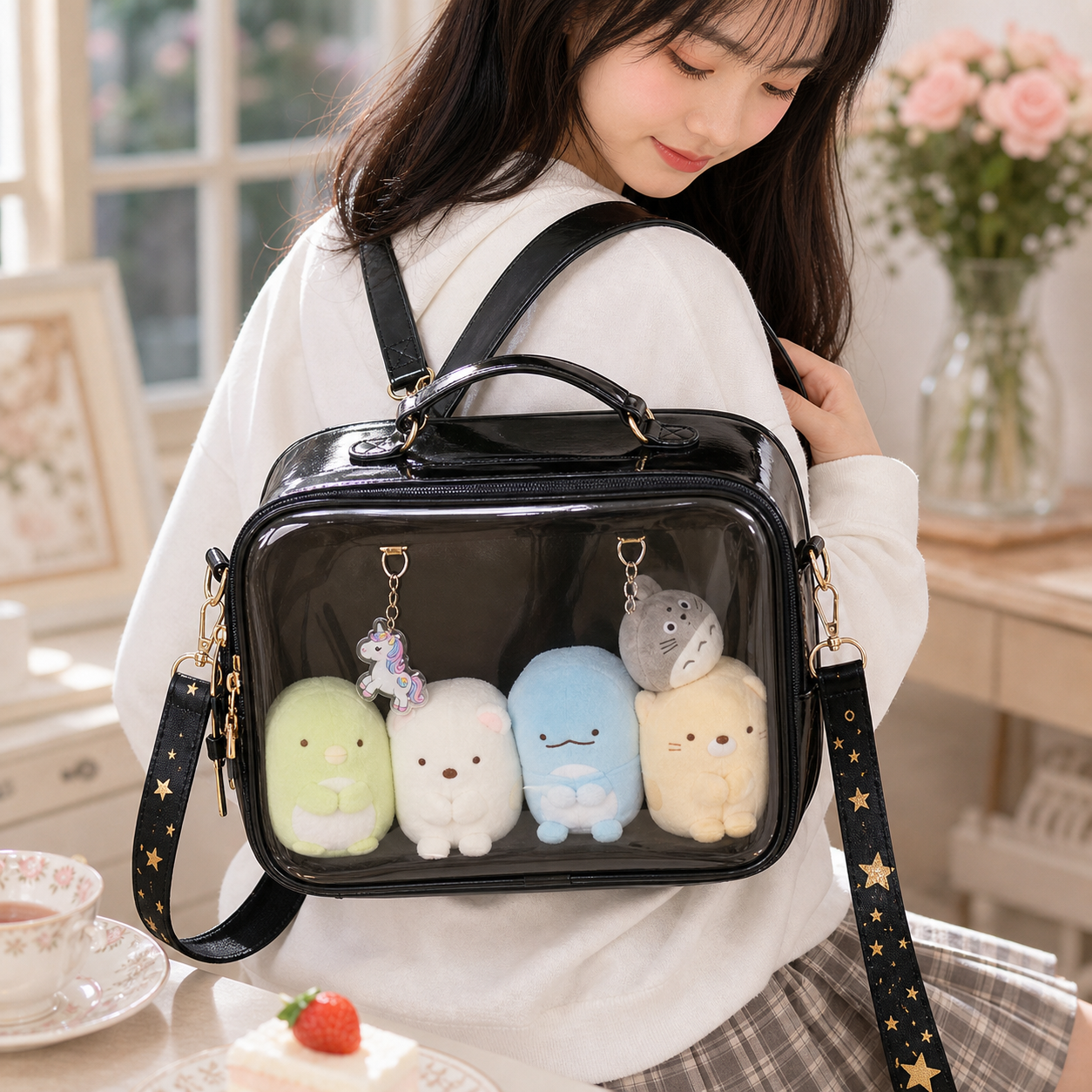
  • Plushie: A stuffed character figure. Displayed inside a dedicated large-window bag or hanging from the exterior. Some ita bag designs include a wide bottom compartment specifically for plush figures. Plushies work best in bags sized for them — a small crossbody window is usually too shallow for a standard plush.

Community and style terms

These terms come from the collector community itself — the vocabulary used in hashtags, setup posts, and ita bag forums. Knowing these terms helps you navigate community spaces and find inspiration for your own setup.

  • Inspo (inspiration): Short for inspiration. The hashtag #itabaginspo is one of the most active ita bag tags on Instagram and Twitter/X. Searching inspo posts is the fastest way to see how other collectors handle layouts, color schemes, and merch combinations. Many collectors save inspo photos before pinning their own insert.
  • Shrine bag: An ita bag dedicated entirely to one character, one idol, or one series. Every item in the window is related to that single subject. Shrine bags signal deep dedication — the opposite of a multi-fandom bag. A well-executed shrine bag usually has a strong color theme based on the character’s design colors.
  • Multi-fandom bag: An ita bag that mixes merch from multiple series, fandoms, or characters. Harder to make look intentional because the color palette and aesthetic vary. Usually held together by a unifying color scheme or by grouping fandoms into zones within the layout.
  • Waifu / husbando bag: An ita bag dedicated to a single character the collector has strong affection for. The term comes from anime community slang. The bag is usually a shrine bag format, with the “main” character’s merch filling the window and any secondary items supporting that character’s aesthetic.
  • Blinged out: Slang for a densely decorated ita bag where the insert is packed full — little visible empty space. Some collectors prefer a blinged-out look; others prefer a more spaced-out layout with deliberate negative space around focal pieces.
  • Fandom color scheme: Organizing the ita bag layout around the colors associated with a specific character or group. Example: an all-pink layout for a character with a pink design. Color-schemed bags look polished even with many different item types because the palette ties everything together.
  • Setup: The full composition of the ita bag — the insert layout, exterior keychains, and overall look. Collectors often share “setup posts” showing the front and back of their bag at events. Some use “setup” and “layout” interchangeably, though layout technically refers to the insert arrangement only.

Shopping and buying terms

These are the platform and seller names that come up repeatedly when collectors talk about where they buy ita bags and accessories. Knowing the landscape saves time when you’re researching a purchase.

  • Taobao: A major Chinese marketplace where many ita bags are manufactured and sold at factory-direct prices. Most international buyers use a Taobao agent (a third-party service that buys on your behalf and ships internationally) because Taobao does not ship directly outside China. Common agents include Superbuy, Bhiner, and Wegobuy. Lead times are typically 2–4 weeks with agent shipping.
  • Wego (ウィゴー): A Japanese fashion brand with one of the longest track records of producing dedicated ita bag designs. Wego bags have a strong following for their quality and variety. Available in Japan in-store and via their online shop; some listings appear on resale platforms like Mercari Japan.
  • Cherry Sauce: A Japanese specialty shop known specifically for ita bag accessories — inserts, display boards, rosette supplies, and pin storage. Cherry Sauce products are frequently mentioned in Japanese ita bag setup posts. International shipping is available from their webshop.
  • Etsy: A marketplace with a large number of independent ita bag sellers, particularly for Western markets. Etsy is useful for handmade inserts, custom rosettes, and artisan ita bags that aren’t available elsewhere. Quality varies by seller — check reviews and photos carefully.
  • Artist alley: The section of an anime or fan convention where independent artists sell their own merchandise — prints, pins, charms, stickers, and more. Artist alley is one of the primary sources for unique, character-specific ita bag merch that isn’t available through mainstream retail. Convention season (spring and fall) is peak time for new artist alley finds.
  • Stretch goal bundle: A listing that includes the bag plus one or more inserts as a package. Common in ita bag shops that want to offer immediate setup value. Check whether the bundled insert matches your preferred type (fabric vs foam) before buying on price alone.

For bags in stock now, the YourItBag shop lists ita bags by type and size. For accessories and inserts specifically, browse the full shop archive.

FAQ

What is the difference between an insert and a display panel?

The terms are used interchangeably, but “insert” is the more widely used label. The insert is the flat backing material inside the window area where you attach your merch — it slides in and out of the bag’s window compartment. Some listings call it a display panel, display board, pin board, or backing panel. The format is the same regardless of the name: a flat surface that sits behind the clear window and holds your pins, badges, or standees.

What is a rosette in ita bag culture?

A rosette is a decorative circular piece made from ribbon, fabric, or felt, used as a centerpiece or focal accent in a layout. Japanese collectors popularized rosettes as a way to give a layout a defined visual center — the rosette frames the most important merch piece and draws the eye inward. Rosettes are typically placed around a large badge, acrylic standee, or character figure. They range from simple ribbon circles to elaborate multi-layer fabric constructions. Pre-made rosettes are sold at Cherry Sauce and on Etsy; many collectors make their own using ribbon supplies.

What does “shrine bag” mean?

A shrine bag is an ita bag dedicated entirely to one character, one idol, or one series. Every item in the window relates to that single subject — no merch from other series or characters. Shrine bags signal strong dedication to one character rather than a broad multi-fandom display. The term comes from the idea of a devotional shrine: everything in the setup pays tribute to one specific subject. Shrine bags tend to look very cohesive because all the merch shares the same design language and color palette.

What is the difference between an enamel pin and a badge?

Enamel pins are made from die-cast metal with colored enamel fill, giving them a hard, polished surface. They are more durable than badges and are generally considered collectible items. Badges (also called button pins or pin-back buttons) are made from a printed paper or image sealed under a plastic dome cover, attached to a metal backing with a pin. Badges are cheaper to produce in small quantities, which is why they are common from indie artists and at conventions. For ita bag display, enamel pins hold their appearance better over time — badge prints can fade or the metal backing can rust. Both work on fabric or foam inserts.

Types, Materials, and Finding Ita Bag Inspiration

Beyond the core glossary terms, a few categories come up repeatedly in collector searches and community discussions.

Canvas ita bag: A canvas ita bag uses woven cotton or cotton-blend fabric for the exterior rather than PU leather or nylon. Canvas ita bags are popular for their texture, durability, and the ease with which they can be customized — many collectors paint or embroider canvas exteriors to match their fandom. The trade-off is that canvas absorbs moisture faster than coated materials and may require more maintenance.

Looking for a DIY option? An ita bag pattern or ita bag sewing pattern is a printed or digital sewing template for making a clear-window display bag from scratch. Patterns are sold on Etsy and Ravelry by independent makers, and range from beginner-friendly crossbody cuts to structured backpack frames. Key measurements to match in any ita bag pattern: window opening size (target 20x24cm minimum), gusset depth for plushies if needed, and strap length for your carry style.

Ita bag rosette: A rosette is a decorative circular fabric ornament, traditionally used on show ribbons and trophies, adapted as an ita bag accessory. An ita bag rosette typically frames a center photo, button badge, or small plushie inside the display window, creating a focal point within the broader pin layout. Rosettes come in fabric, satin, and ribbon variants and are sized to sit flat behind the window.

Ita bag black refers to bags with a black exterior — the most versatile colorway for dark-fandom and gothic setups, and one of the top-selling color variants across all ita bag formats. A fluffy ita bag uses plush fabric on the exterior. A holographic ita bag has an iridescent or color-shifting exterior material. An MX Paint ita bag refers to a brand or artist-run series known for painted accent details.

A rosette ita bag specifically refers to a bag that comes pre-assembled with a rosette accessory in or around the window. Leather ita bag describes genuine or faux-leather exterior bags (most “PU leather” ita bags are faux; true leather ita bags are rare and typically handmade). A circle ita bag has a circular window opening instead of heart, star, or rectangle — less common but valued for its central focal point. An ita pin bag or pin bag is an informal name for any ita bag used primarily for enamel pin display.

Ita bag inspiration (ita bag inspo): Finding ita bag inspiration is one of the first steps for new collectors. The most useful sources are: r/ItaBag on Reddit (real photos from actual users), TikTok and Instagram hashtags (#itabag, #itabaginspiration), and Pinterest boards organized by fandom or color theme. Good ita bag inspo shows the full bag including strap and exterior, not just the window — this helps you judge whether the bag format and size actually work for your collection.

Shop ita bag accessories and inserts

Ready to build or upgrade a setup? Browse the full ita bag selection and accessory listings to find inserts, bags, and display pieces that match your merch and carry style.

Browse All Ita Bags Full Shop Archive Complete Ita Bag Guide