A Brief History of Ita Bag Culture
Ita bags grew out of the same otaku fan culture in Japan that produced itasha (decorated fan cars) in the early 2000s. Both the car and bag versions share the same principle: cover a functional object in so much character merch that it becomes a visible declaration of fandom devotion.
The bag format became popular at events like Comiket, Japan’s massive twice-yearly doujinshi market, where fans began using tote bags with clear panels to display their favorite character merch while keeping hands free. Early ita bags were often DIY — fans sewed clear pockets onto existing bags or modified regular totes with acetate panels.
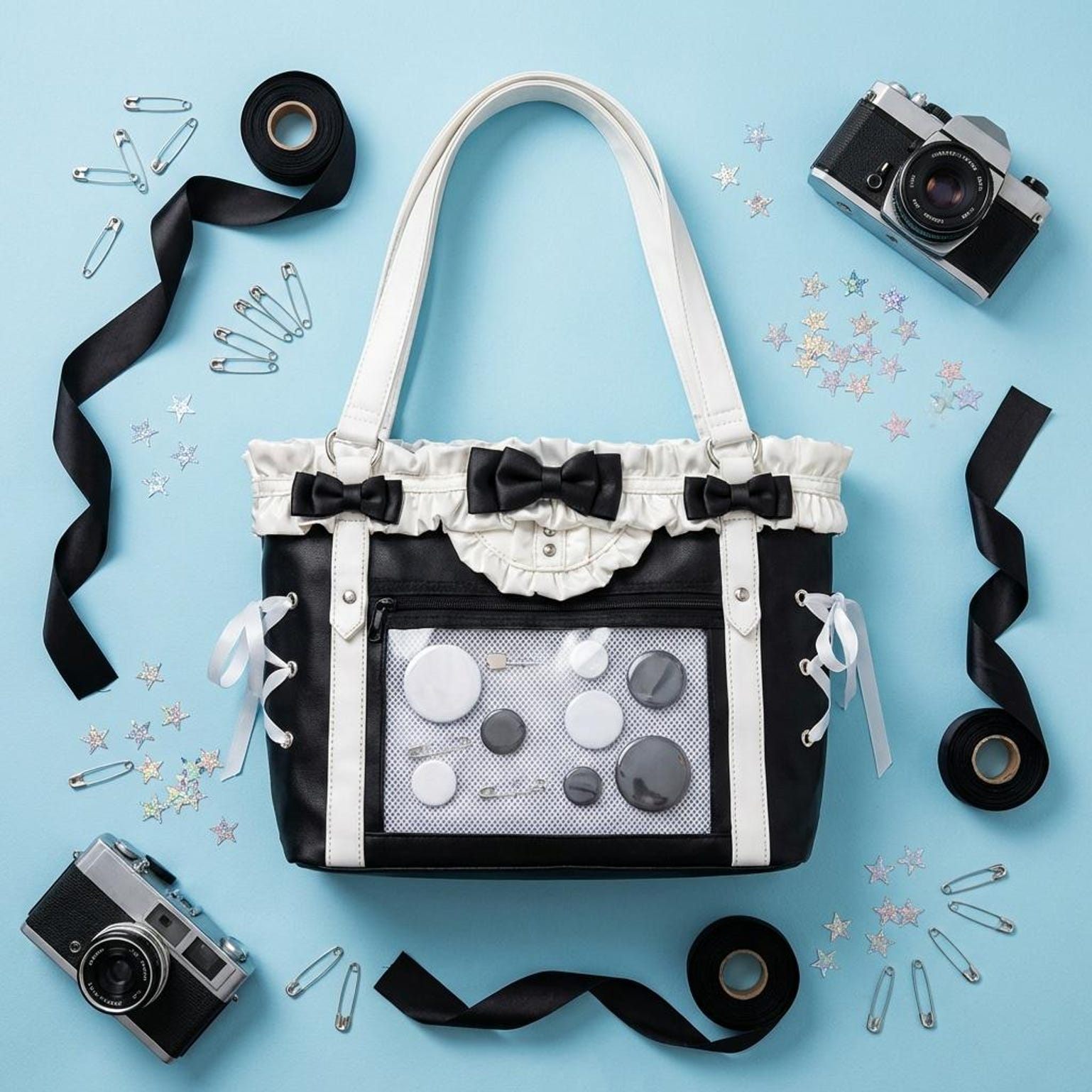
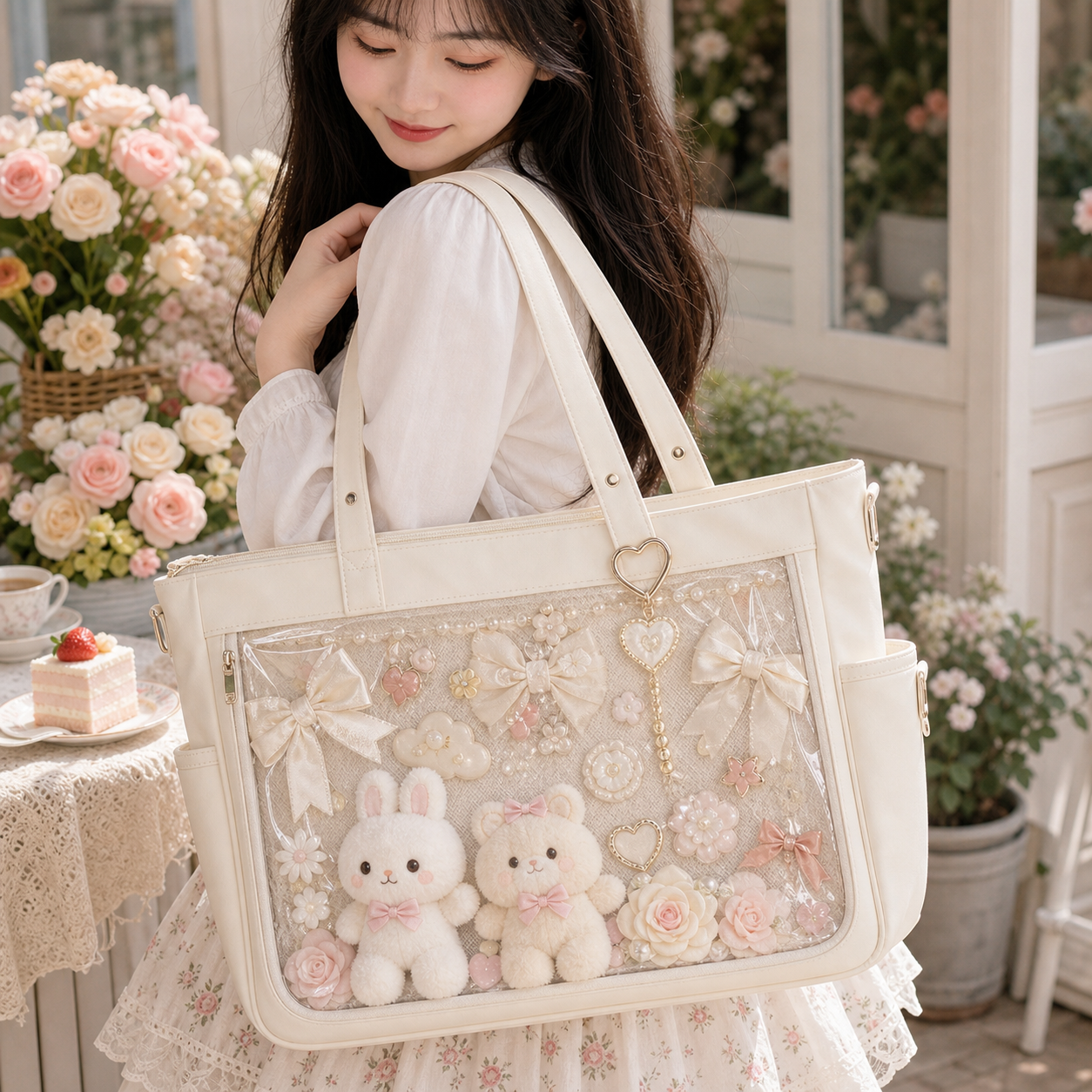
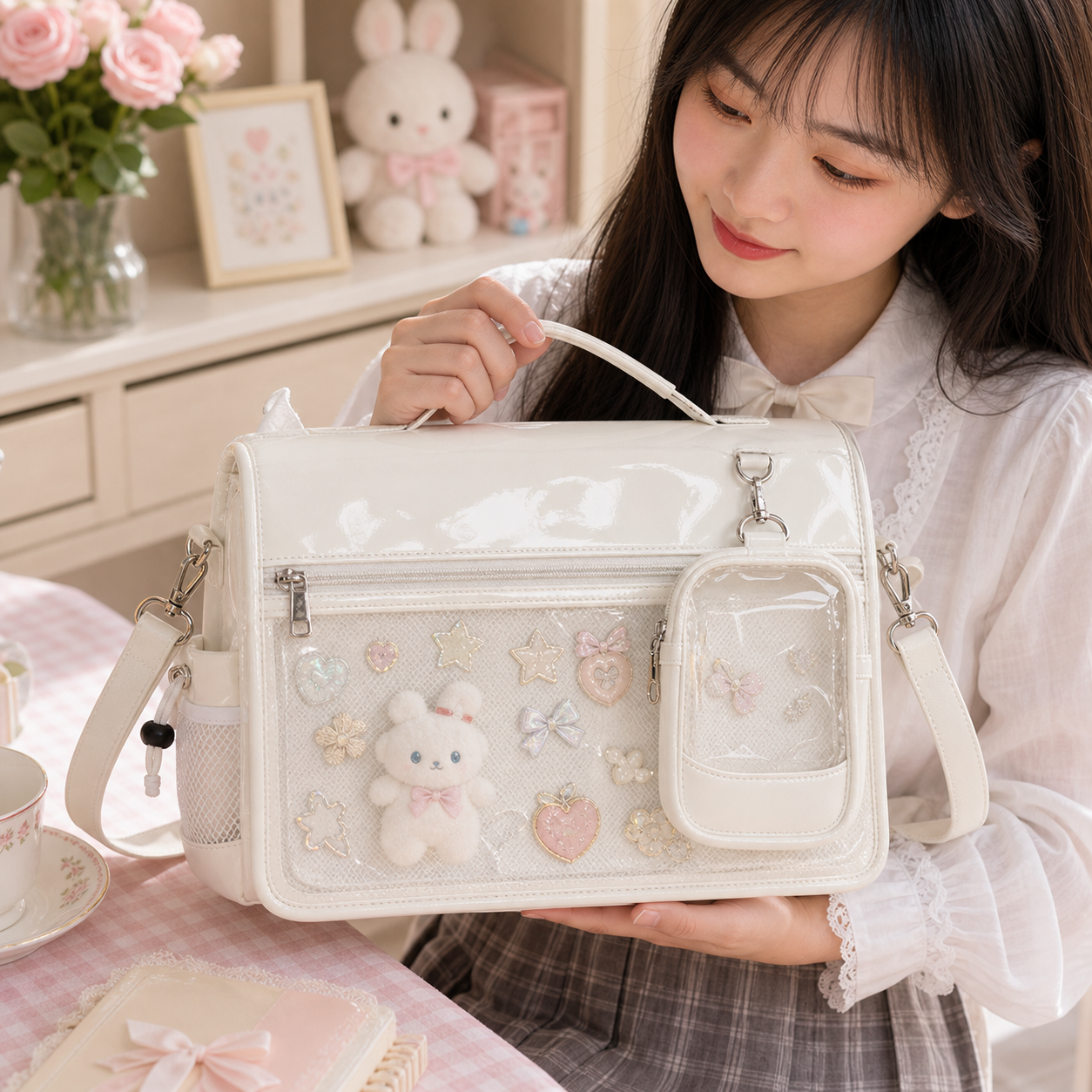
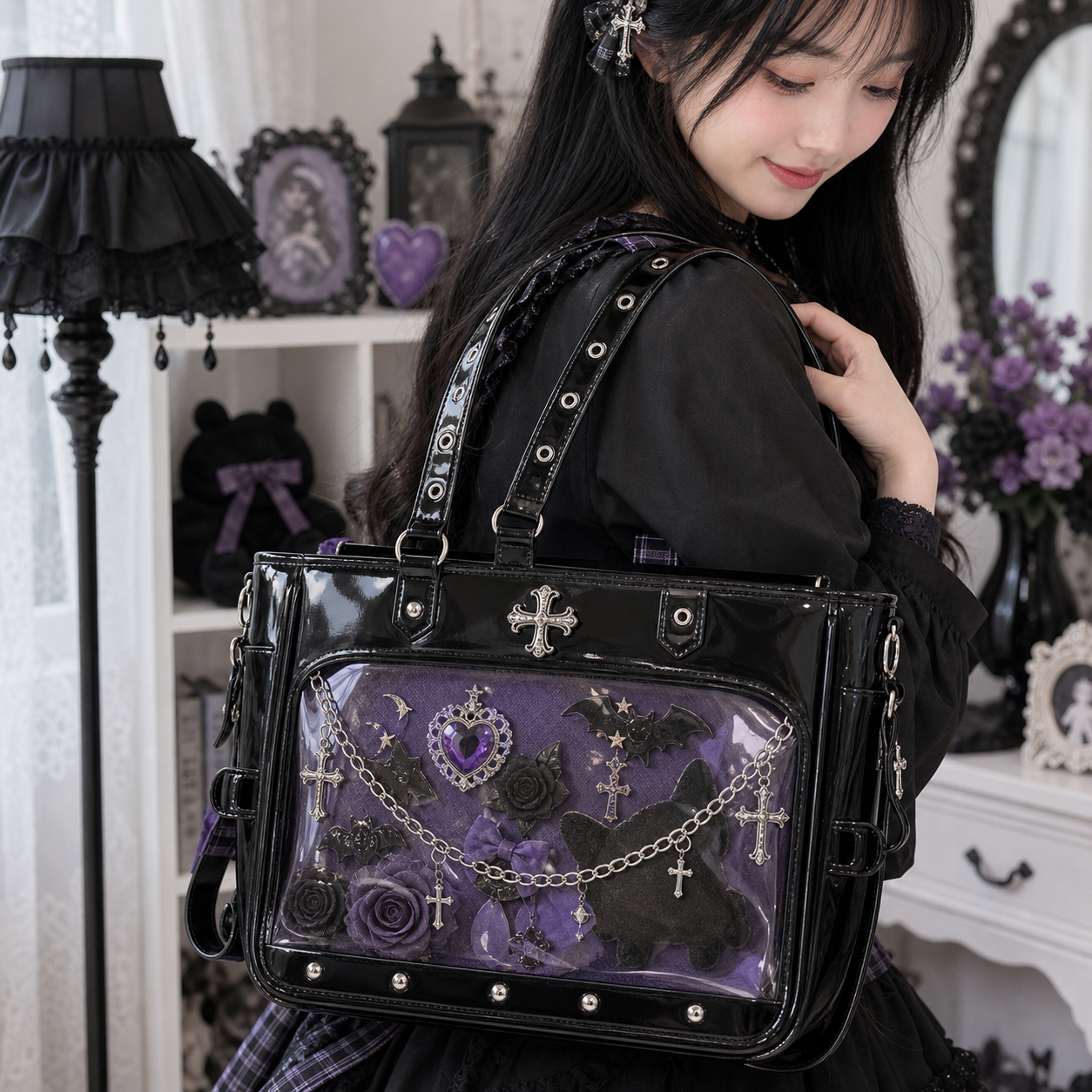
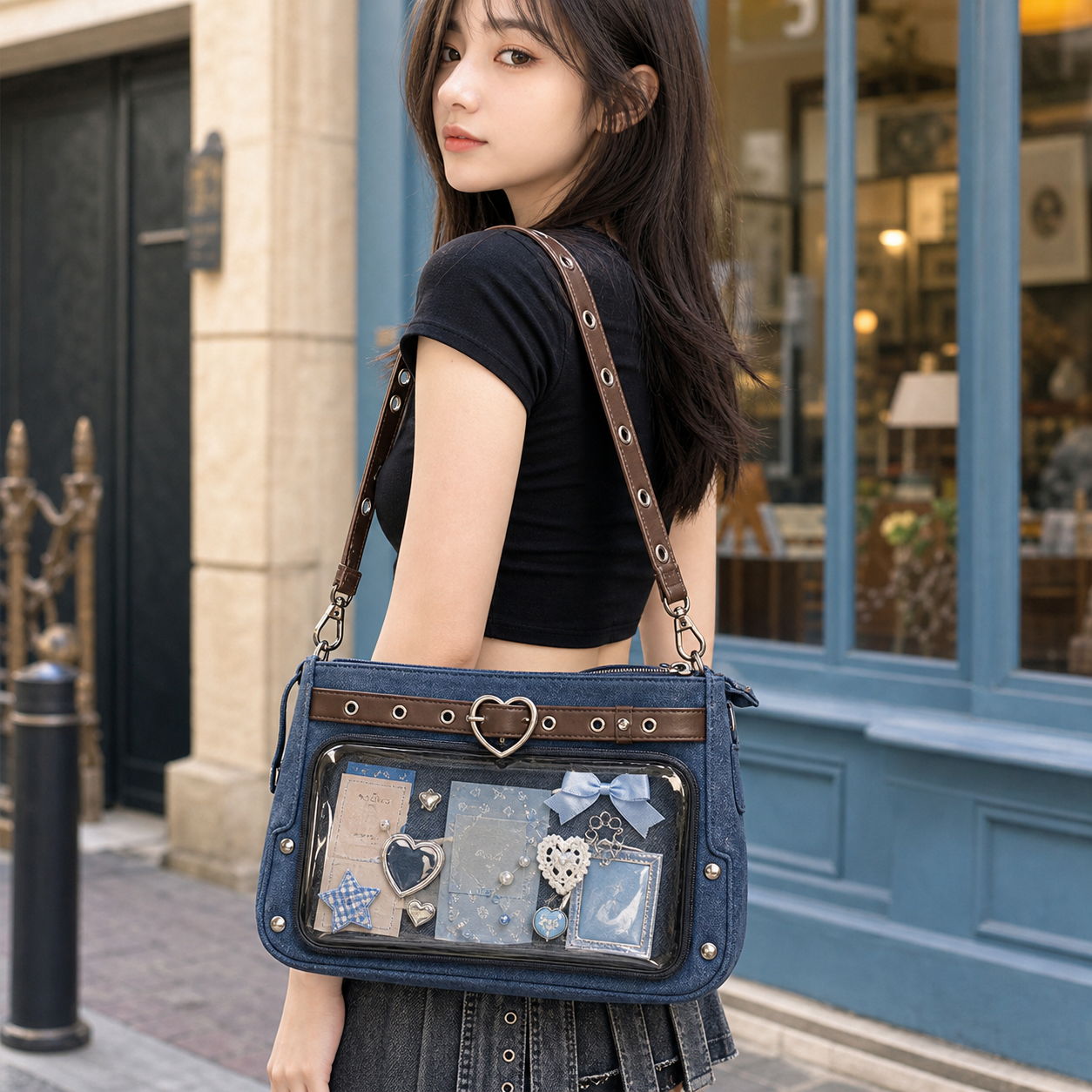
By the mid-2010s, Japanese brands like Wego and Swimmer began producing purpose-built ita bags: bags designed from the start with a display window and a removable insert. The category became a recognizable product type with its own design language — typically heart or star windows, kawaii color palettes, and padded inserts specifically sized for enamel pins.
Global spread followed the growth of anime fandom outside Japan. Western fans encountered ita bags at anime conventions, through social media, and via international shipping from Japanese retailers. By the late 2010s, ita bags had a robust international community, with English-language subreddits, TikTok accounts, and dedicated stores serving buyers in the US, Europe, and beyond.
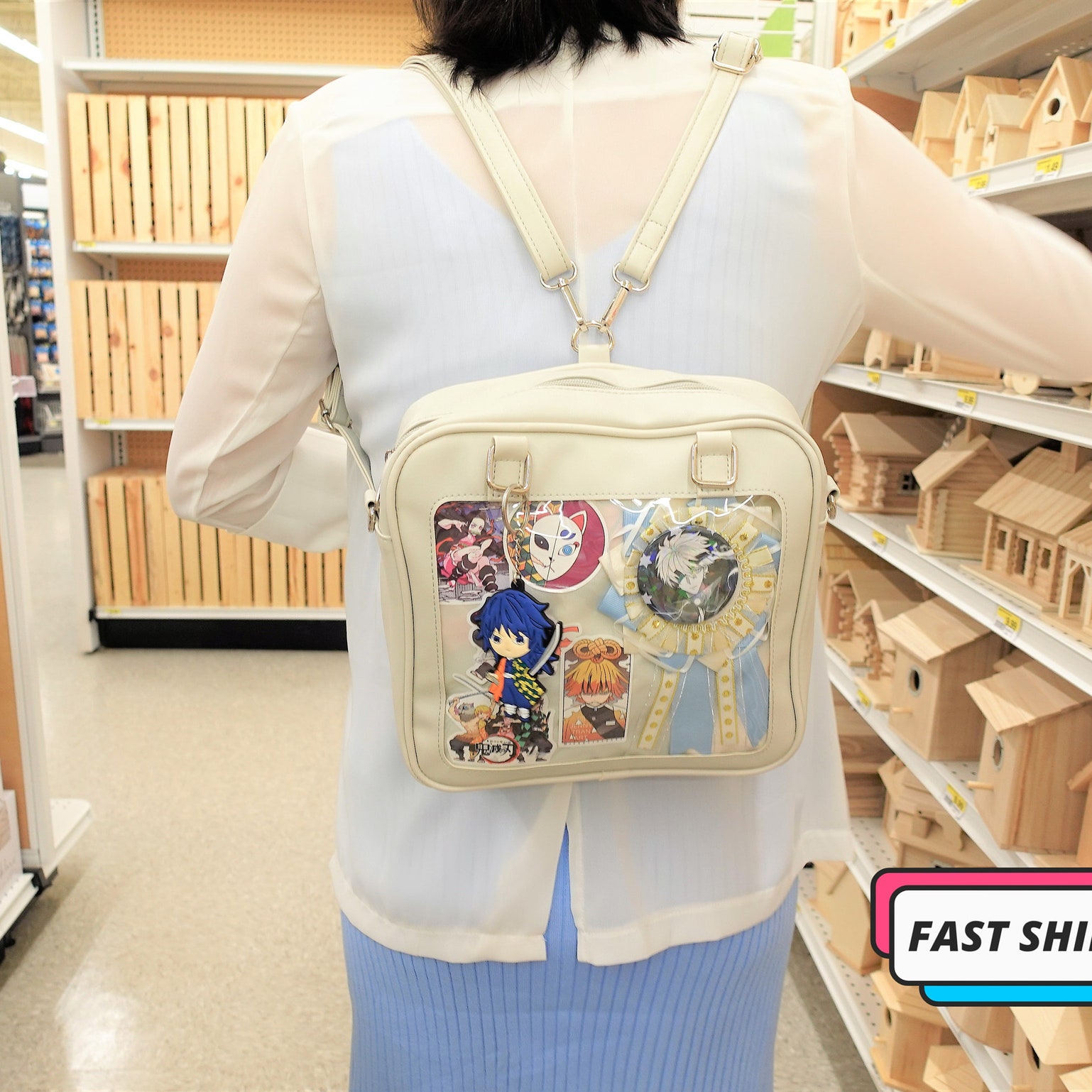
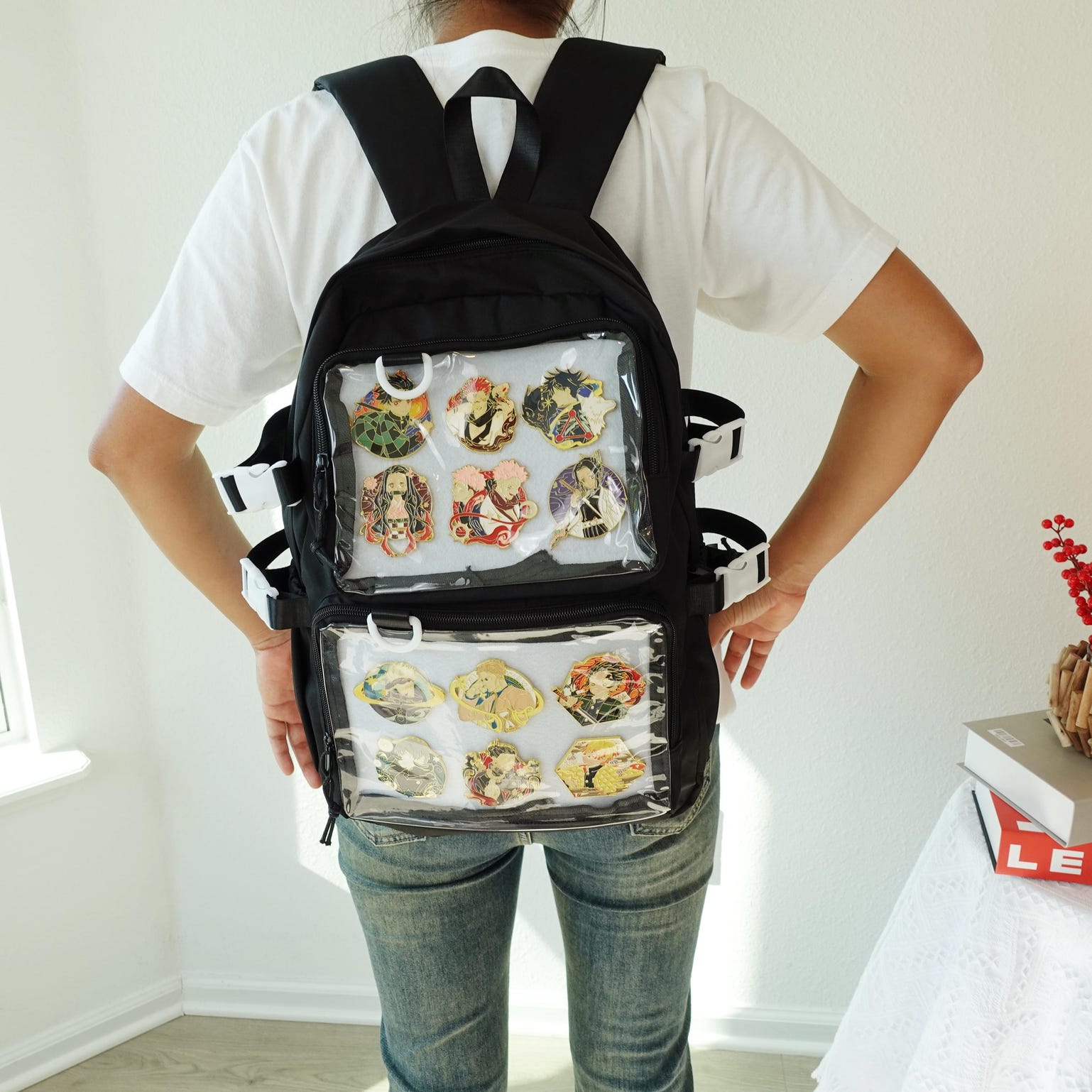
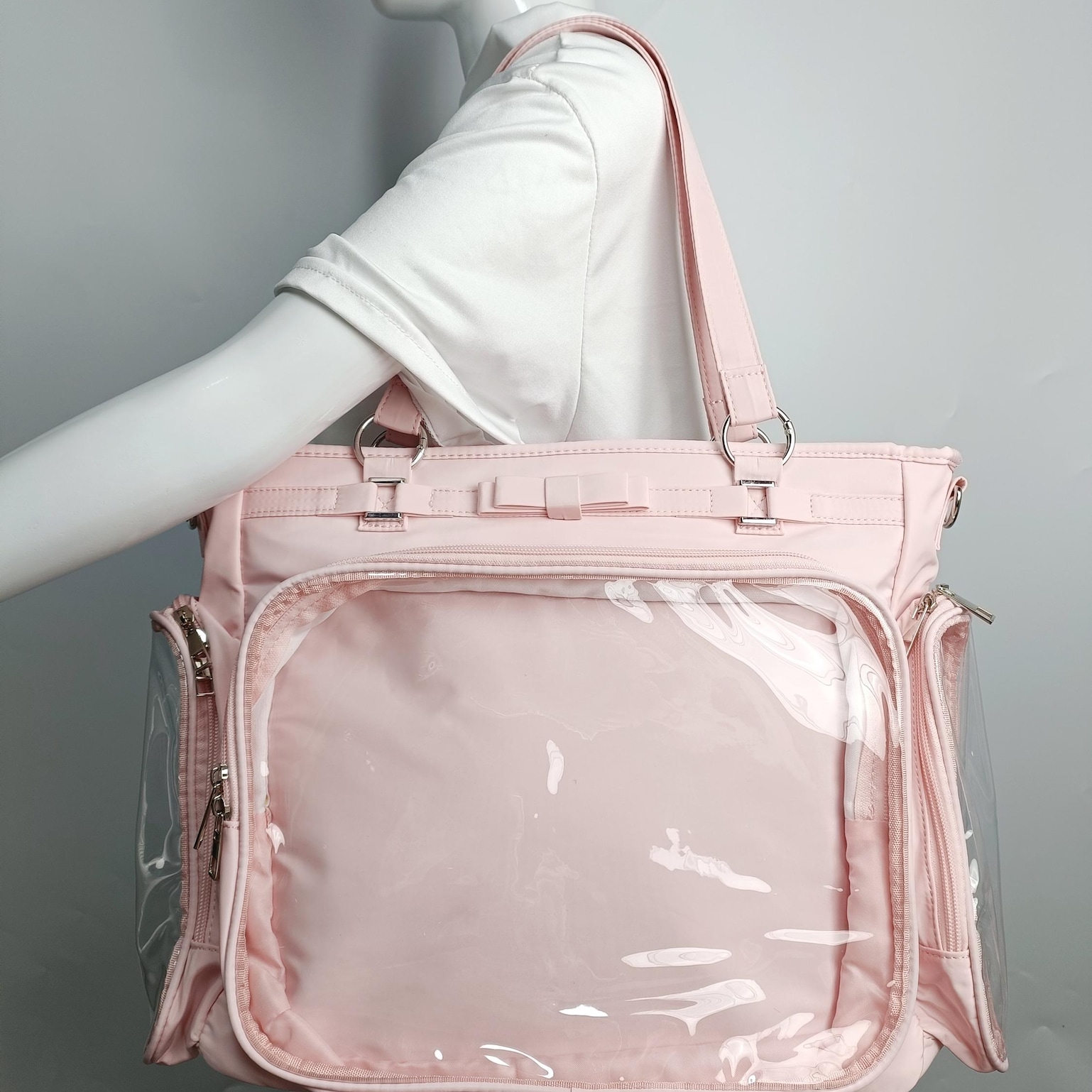
Today the category spans a wide range of formats — messenger bags, backpacks, crossbody bags, shoulder bags, and wallet-style mini bags — and is used by collectors across anime, K-pop, gaming, and general kawaii aesthetics. The display window and removable insert remain the consistent through-line across all of them.